Habitat
-
 Habitat
(2014 on
Linux,
Windows,
Macintosh)
Habitat
(2014 on
Linux,
Windows,
Macintosh)
Description
Habitat is a MMO (massive multiplayer online game), originally designed by Chip Morningstar and Noah Falstein at Lucasfilm Games. Although it is not the first online game, it lay the groundwork for modern MMORPGs by allowing more than 20,000 gamers to play in the same open-ended, virtual world, even though it doesn't contain typical RPG characteristics such as levelling, skills, abilities and classes. Still, Habitat forms the link between text-based MUDs that rarely topped the 100-player mark and modern MMORPGs. Because of the limited trial phase it was released in, it never contained more than 500 players.
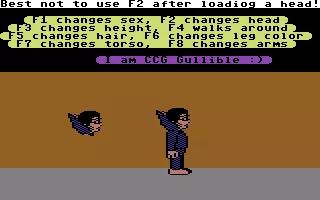
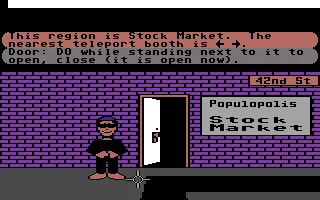
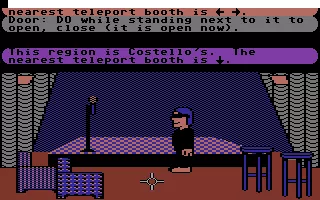
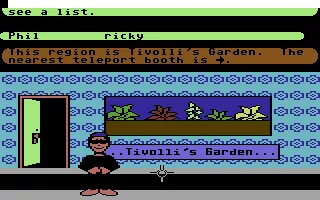
The game was originally released as a beta test and could only be played through Quantum Link, an online service of Quantum Computer Services (which later became America OnLine), and was only available in the evenings and weekends, as network traffic was cheaper at those moments. You control an avatar, seen from a third-person perspective in a 2D world. Avatars can gesture, move around, communicate with other characters, and manipulate objects. The world consists of thousands of regions - different environments that can be accessed through doors, teleportation and other entrances. You can also communicate through the in-game mail system or by using ESP (telepathic abilities), and personalise your avatar with the skin tone, features, or clothing.
Players can visit stores, houses, pubs, forests... and use objects such as tools, weapons and magical items. The stress is on the social dimension. You can get married, play games, write a book, go adventuring, visit theatres or lectures, or start a company, a guild, or a religion. Each player has a bank account and there is an in-game economy based on tokens. The game designers even appeared in the game as powerful opponents and global quests were organised. These are presented as one-time challenges, and not as instances multiple players can encounter at different moments. Players can also turn into ghosts to discover new areas without risks. Although there are no real classes, people can behave as thieves, law enforcers or clergymen. There are no regulations and players are only limited to what the game code allows. Quests are provided by the Oracle, an almighty entity that 'created' the Habitat. The libertarian approach with the freedom in gameplay was introduced because people solved quests too quickly and the developers would never be able to keep up with new content.
New features were added gradually. Rather than controlling or limiting the possibilities, the developers observed gamers' behaviour and introduced novelties according to the needs. It also includes PvP fighting (player vs. player) and safe zones in the cities. Habitat has its own newspaper, The Rant, documenting events and reserved for announcements.
The project was ended in 1988 when Quantum Link observed that the 500 players played the game so much that the game's traffic ate up 1% of the total capacity of the entire QL service. The company feared it would not be able to sustain the network with a full release open to many more players, and scrapped the project. It resurfaced later in 1988 as Club Caribe, and as Fujitsu Habitat in 1990 when the technology was licensed to Fujitsu. Eventually, Fujitsu bought it entirely and launched it as WorldsAway in 1995. The game currently lives on as Vzones and the fantasy variant Second Kingdom. Right now, the unrelated Second Life incorporates most of Habitat's mechanics.
Spellings
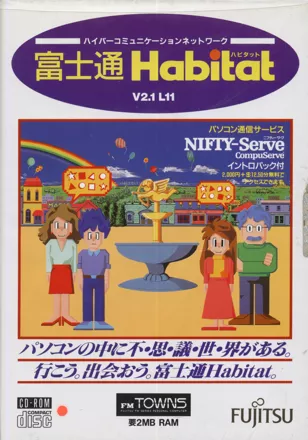
- 富士通 ハビタット - Japanese spelling
Screenshots
Credits (Commodore 64 version)
30 People (26 developers, 4 thanks) · View all
| Project Leader | |
| Lead Designer | |
| Programmer | |
| Commodore 64 Software | |
| Artwork | |
| Animation | |
| Additional Artwork | |
| Original Cel Animation System | |
| Original Commodore Object Memory Manager | |
| Additional Creative Support | |
| Official Avatar Handbook Written by | |
| Production Manager | |
| General Manager | |
| Thanks to | |
| Special Thanks to | |
| [ full credits ] | |
Reviews
Critics
Players
Average score: 3.4 out of 5 (based on 1 ratings with 0 reviews)
Be the first to review this game!
Discussion
| Subject | By | Date |
|---|---|---|
| Relaunch | Cavalary (11445) | Jun 4, 2017 |
Trivia
Inspiration
The designers were inspired by Peter Langston's multiplayer strategy game.
Analytics
Upgrade to MobyPro to view research rankings!
Related Games

Released 1990 on Amiga, 1991 on Atari ST, 1992 on DOS...
Released 1989 on DOS

Released 2001 on Windows

Released 2006 on Windows

Released 1993 on DOS

Released 2020 on iPad, Xbox One, Xbox Series...
Released 1996 on DOS

Released 2012 on iPhone, iPad, Android

Released 2023 on Nintendo Switch, Windows
Related Sites +
-
Habitat Chronicles
Cyberspace. Virtual communities. Online games. Distributed systems. Opinion, history, advice, and silliness from two guys who've been building this stuff for a long, long time. -
Interview with Chip Morningstar 1987
Interview with the UK Computer and Video Games magazine. -
Lucasfilm's Habitat
A fanpage with history, screenshots and stories - by Keith Elkin. -
The Lessons of Lucasfilm's Habitat
A paper by Chip Morningstar and F. Randall Farmer, presented at The First International Conference on Cyberspace held in May 1990 at the University of Texas at Austin.
Identifiers +
Contribute
Are you familiar with this game? Help document and preserve this entry in video game history! If your contribution is approved, you will earn points and be credited as a contributor.
Contributors to this Entry
Game added by Sciere.
PC-98, FM Towns added by Infernos.
Additional contributors: Pseudo_Intellectual, Patrick Bregger, Rik Hideto, Jo ST, Infernos.
Game added April 5, 2006. Last modified October 17, 2023.