SwordQuest: WaterWorld
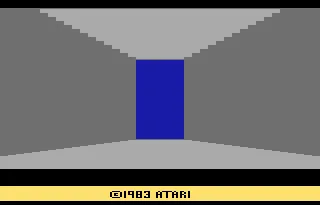
Description
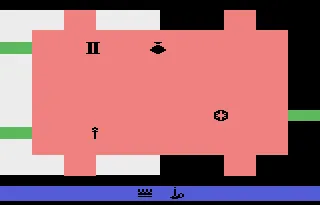
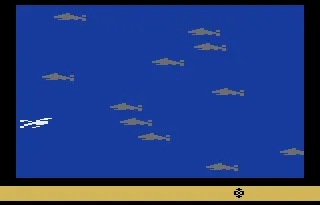
Much like the games SwordQuest: EarthWorld and SwordQuest: FireWorld before it, SwordQuest: WaterWorld involves walking through rooms, picking up items, beating action stages to reveal more items, and seeing the odd set of numbers flash at you when you have the right items in the right rooms.
The sets of numbers, for instance 8-4, were actually a combination of a page number and a panel number in the comic book that came with the game. On the page indicated by the game, you would find a word hidden somewhere in the numbered panel. When all the correct words were found, you could send them to Atari in hopes of winning the SwordQuest contest that this game was designed for.
Groups +
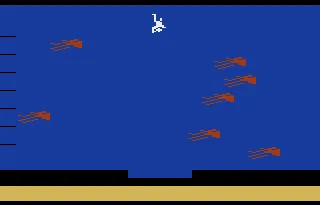
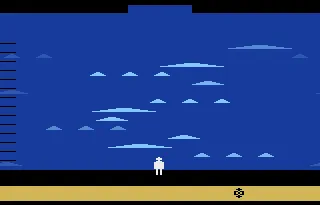
Screenshots
Credits (Atari 2600 version)
15 People
| Created and written by | |
| Visual Concepts and Art | |
| Design | |
| Lettering | |
| Coloring | |
| Editor | |
| President and Publisher | |
| Vice President, Editorial Director | |
| Managing Editor | |
| Editorial Coordinator | |
| Production Manager | |
| Vice President, Operations | |
| Treasurer | |
| Cover Artwork |
|
Reviews
Critics
Average score: 21% (based on 4 ratings)
Players
Average score: 1.5 out of 5 (based on 10 ratings with 0 reviews)
Be the first to review this game!
Trivia
Rarity
Due to the game originally only being made available by mail order by the Atari Club, then subsequently being sold in stores in a limited quantity made for this to be one of the more hard to find games for the Atari 2600.
Information also contributed by Pat Cdr.
Analytics
Upgrade to MobyPro to view research rankings!
Related Games

Released 1997 on DOS
Released 1979 on Commodore PET/CBM

Released 1995 on Virtual Boy

Released 1995 on Game Boy

Released 1995 on SNES

Released 1982 on Atari 2600
Released 1983 on Atari 2600
Related Sites +
-
Video review of the SwordQuest series (WARNING: Language)
The Angry Video Game Nerd, James Rolfe, reviews the SwordQuest series, including SwordQuest: WaterWorld.
Identifiers +
Contribute
Are you familiar with this game? Help document and preserve this entry in video game history! If your contribution is approved, you will earn points and be credited as a contributor.
Contributors to this Entry
Game added by Pat Cdr.
Additional contributors: Alaka, LepricahnsGold, Cantillon.
Game added November 2, 2004. Last modified March 12, 2024.