Castlevania II: Simon's Quest
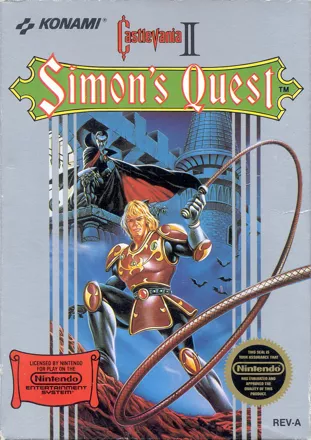
- Castlevania II: Simon's Quest (1989 on Dedicated handheld)
Description official descriptions
Castlevania II: Simon's Quest is the second game in the Castlevania series. After the vampire killer Simon Belmont destroyed Count Dracula in the previous game, an evil curse possessed him. The only way Simon can break the count's curse is to find five of Dracula's body parts (which are mysteriously strewn throughout Transylvania) and burn them.
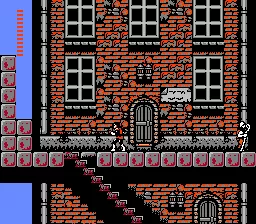
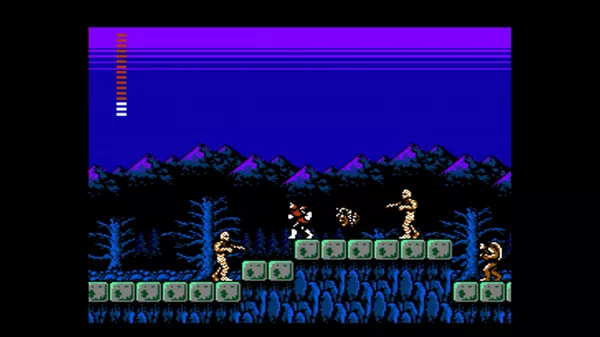
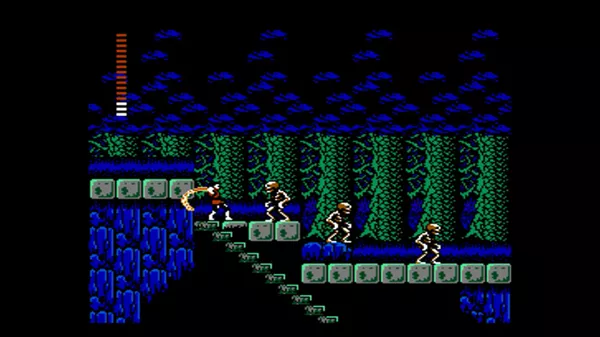
Gameplay-wise, Simon's Quest is quite different from its predecessor, combining side-scrolling action and platforming with strong role-playing elements. The game does not feature the traditional stages but allows the player to freely roam the land of Transylvania in the style of Nintendo's Metroid. The game world is divided into outdoor areas, dungeon-like mansions containing crucial quest items, and towns, where Simon can talk to non-player characters, rest, and buy items in shops. Some areas can only be accessed by equipping and using specific items that must be bought or found.
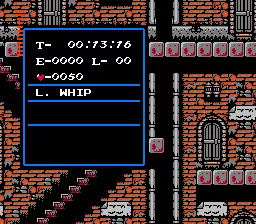
The RPG elements are present in character growth, monetary system, and weapon upgrades. Simon's initial whip can be replaced by more powerful variants that can be purchased in various towns. Hearts are used as currency in the game and are obtained from defeated enemies in different quantities. The same hearts also function as experience points: after Simon has accumulated a set amount, he levels up and his attributes are increased.
The game features a day and night cycle that occurs at accelerated pace in real time. At night, enemies inflict more damage, but also drop more hearts upon defeat. Shops are closed during nighttime, and townspeople are replaced by wandering zombies.
Spellings
- ドラキュラII呪いの封印 - Japanese spelling
Groups +
Screenshots
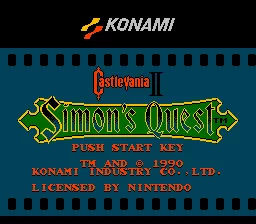
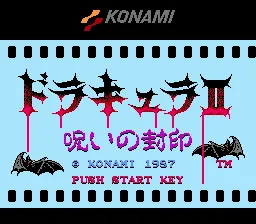
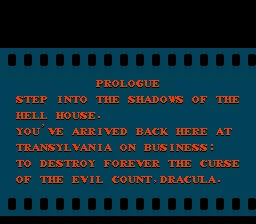
Promos
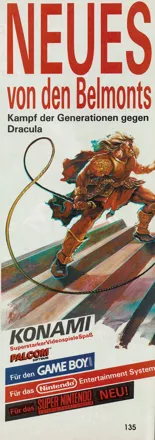
Credits (NES version)
12 People
| Invincibility |
|
| Permanence |
|
| Philosophy |
|
| Masterpiece |
|
| Sensitivity |
|
| Excellence |
|
| Ambivalence |
|
| Flourish |
|
| Admiration |
|
| Superiority |
|
| Synchronism |
|
| Circumstance |
|
Reviews
Critics
Average score: 68% (based on 27 ratings)
Players
Average score: 3.4 out of 5 (based on 115 ratings with 8 reviews)
Simon, is there ever a good night to have a curse?
The Good
I believe that it’s necessary to give a game a second chance. There are a lot of outside factors that affect how we view the games we play. Things like disappointment, anticipation, nostalgia, discomfort, or even sometimes illness can colour the games we play poorly. This is why I decided to give Castlevania 2: Simon’s Quest a second chance. As the legend goes, I acquired my NES in high school as my first retro system. Among the games I received with it was Simon’s Quest. I was disgusted with its poor controls, confusing design, and punishing difficulty, likely due to my inexperience with older titles. Nowadays, however, I’m a bit better adjusted to the games of yesteryear, so I decided it was high-time that I went back to see if Castlevania 2 is as bad as I remember.
Sequels are a huge part of the video game industry, and why not? It gives developers a chance to expand on what made the first game good, or to take it in a new direction. Castlevania 2 leans heavily into the latter category. The gameplay itself will feel very familiar to anyone who has played the first Castlevania, but the way it’s presented and set up has been changed drastically. The stage by stage progression of the original has now been replaced by a more interconnected world. This is interesting, since this is more or less the direction that games later in the series decided to go.
Players are once again put in control of Simon Belmont. It seems that Dracula put a curse on him during their battle in the first game, and the only way he can break it is to gather up Dracula’s remains to resurrect him, and then defeat him again. I find this to be an interesting and involving storyline, even if it is a bit farfetched. Why, for example, would Dracula’s ring, or even his nail, be required for his resurrection? Then again, I’m quite thankful that it isn’t necessary to gather up every part of Dracula’s corpse. This is partly because it would have made the game far longer and more tedious, but also because I’m not sure how I’d react to picking up Dracula’s penis.
People who’ve played the first Castlevania will feel right at home with the controls. Simon still moves in the same stiff fashion, but once you’re used to it, the controls can be very comfortable. Whip upgrades also make a return, but now you must buy them and they will also remain with you after you die. Added is the ability to gain experience points and level up, which can increase Simon’s life bar. Besides that, Simon’s Quest feels a lot like the first Castlevania. It should be comforting to any fans of the previous game.
I think what is most important, however, is that the atmosphere from the first game is actually improved upon. Everything feels very oppressive and hopeless, which is difficult to pull off on the NES. I can’t help but question the decoration in the mansion stages. They look more like dungeons to me. At least hang a picture up. The music is also just as stellar as the original’s, putting it right up there with the best on the NES.
The Bad
I can admire it when a developer takes their franchise in a new direction, but yeesh. The idea is to keep all the things that were good about the original and then expand upon them. I am actually kind of stunned by how many poor design choices were made in creating this game. I’d use the analogy “one step forward, two steps back” but that doesn’t begin to cover it. Some of the game’s problems can be traced back to a lack of polish, others seem to indicate the game being rushed to market, but some are just baffling.
The biggest offender in the game’s design is the puzzles. Castlevania 2 employs a very strange logic. For example, holy water is used to eliminate breakable blocks. Worse yet, nobody in the game world tells you that. You just have to hope that you throw holy water at the right place, and happen to make the connection. But wait, it gets worse. There are places in the game that require you to have a particular item equipped, then they require you to wait a relatively lengthy amount of time, and expect you to sit in a certain pose. Nowhere in the game does anyone or anything tell you this. I’m not sure how we’re supposed to even know what a particular item is for. Even the instruction manual doesn’t adequately explain them.
I challenge you to complete this game without some sort of strategy guide, because I don’t think it’s possible. I’m normally the sort of gamer who never employs any sort of outside help when it comes to my games, because I feel it cheapens the experience. Even despite my stubborn nature, however, I caved and checked a guide. Maybe it’s simply a product of its time. Perhaps, it was targeted more towards the Nintendo Power subscribers. Maybe it’s a case of poor translation. Whatever the reasons are, it comes across as obnoxious nowadays.
The day and night cycle is a form of irritation for me. In concept, it’s an interesting idea, but the way it’s employed makes it a nuisance. The game progresses on its own clock, so when it becomes night, enemies become stronger and the buildings in town lock their doors. The problem arises when you need to wait for the stores to open again. Night can last quite a while, especially if it occurs directly before you actually reach the village. You’ll be left standing and waiting. Your best bet is to either get up and walk away from the controller, or go and grind for money.
A smaller complaint of mine is the lack of bosses. All in all, I counted three, if you can call them bosses, that is. Aside from them being sparse, they were also very simple and easily defeated. Especially the final boss, who, with very little effort, I vanquished before he could even fight back on my first attempt. To make things worse, there’s no sense of accomplishment from beating them. After you leave the room and return, they’re back, and you can just walk right on past them. It’s very peculiar that the game only has three bosses, despite having several lairs. Why not put one in every mansion? I don’t understand.
The Bottom Line
It’s a real shame. Most of the elements that make the Castlevania series good are still present and as enjoyable as ever in Simon’s Quest. Unfortunately, it’s all buried beneath some absolutely horrendous and frustrating game design. The inability to progress without any outside assistance is extremely vexing. If, however, you’re the type of gamer who normally looks at a strategy guides anyway, there’s a good chance you’ll enjoy this game a lot more than I did. On the other hand, if you’re someone like me who’d rather wander aimlessly for hours than consult a guide, then there’s a good chance you’ll see the game as I have: BAD, bordering on broken.
NES · by Adzuken (836) · 2009
In principle, one of the most disgusting video games ever
The Good
For crying out loud, this sounds like the old kids' blindfolded Halloween game: "The Belmont clan member killed the evil Count Dracula. And these are his eyes. And this is heart. And this... is his nail!" EEEWWW!
His nail? What's up with that? How much demonic evil can possibly be contained in a nail? Anyway, what is good about this game? I appreciate how Konami took a chance with their young Castlevania franchise and branched out into an adventure theme in addition to relentless whip-wielding action. The various whips you can attain were also excellent.
As is now expected with any Castlevania game, the graphics were simply untouchable. The most remarkable detail that I recall from the game is the variety of hanged corpses whenever Simon entered a chamber containing a vampire body part. Although now I can't help but wonder how they got there. Was there some ritual of executing people in the body part chambers?
The Bad
Hey, when a game doesn't grab you, it doesn't grab you. Simon's Quest never really did anything for me. I rented it, worked through it, won it, but it never made any kind of impression on me. Again, I appreciate the fact that the game designers took a chance with the adventure angle to keep the series from getting stale. But this game just didn't work for me.
The Bottom Line
Play Simon's Quest for the satisfaction of knowing you have experienced as much of the venerable Castlevania franchise as possible.
NES · by Multimedia Mike (20664) · 2005
Simon's Quest: Non-Linear! RPG-Puzzles! Engrish!
The Good
Castlevania II: Simon's Quest (Simon's Quest) for the Nintendo Entertainment System (NES) is one of those great NES games that could break up friendships.
In designing this sequel, the developers opted for an adventure or role playing game-style, which people tended to love or hate with a deep passion
Nintendo did a similar thing with Zelda II, a game that is not as polarizng among Zelda fans as Simon's Quest is among Castlevania fans.
For better or for the worse, the “haters” of Simon's Quest won the day, because subsequent Castlevania games returned to the original, action-packed, blistered thumbs game-play style.
However, I am one of these people (perhaps in a minority) who actually enjoyed the changes seen in Simon's Quest.
This is not to say that I “hated' the arcade style of Castlevania or its sequels. However, as someone who does enjoy role playing and adventure games, it was refreshing to see these elements used in a home console game.
Most of the really great role playing games were only accessible – especially without censorship – through the original computer edition or Japanese imports.
Likewise while some great adventure games were designed for the PC and Mac, few of them ever made the jump to the home console sytems.
I am not saying that hack and slash, arcade action isn't fun, but it was only a small slice of what the gaming industry was doing throughout the 1980s and 1990s.
Maybe this is not a complaint widely shared, but it is my opinion and I am sticking to it. Now that I have dealt with the love-hate relationship attached to this game. Let us get back to Simon's Quest game itself.
Simon's Quest combines side-scrolling arcade game with some traditional role-playing or adventure gaming elements.
Instead of linear stages, the game presents a large world to explore, with both night time and daytime elements. The player has to explore the world, interact with different characters (especially in towns), locate items to solve puzzles as well as upgrades to your weapons.
Simon needs to improve his strength, obtain money and stronger weapons if he is going to succeed in this quest. If you enjoy basic role playing or adventure game elements, then you will enjoy what this game has to offer.
Did I mention the night and day sequences? Well, they are worth mentioned again! Not only does the game actually switch between night time and daytime, but things tend to get creepier at night.
Nighttime means that town shops are closed, as towns are invaded by zombies and, yeah, generally everything gets creepier at night in this game. Frankly, this is probably as close to a horror film as a game for a Nintendo system could get – outside of Japan.
Simon's Quest features improved animation and graphics and players should have little complaints with the hit detection, inventory menu or other such basic game play mechanics.
Simon's Quest does not skimp on the arcade action. Several creepy-looking buildings in the game return the player to side-scrolling action.
Even when you are explore the rustic charm of Translyvania, their are plenty of supernatural creatures – large and small – will have to be killed if Simon is to break the curse.
Ah, the curse! Simon is forced to locate the missing body parts of Dracula, so that he can burn them in the fire – of Mount Doom? No, but someplace special.
Apparently, when Simon killed Dracula the first time, he forget to burn the body, or maybe Simon just didn't know any better.
Granted, one would have thought that a skilled vampire hunter would have known to do this beforehand. It does make you wonder whether or not Simon has the education background needed to fight evil supernatural creatures, without, you know, causing widespread destruction or spreading dangerous curses.
OK, maybe Simon does not need a "license to kill", but I refuse to believe that I am the only Castlevania fan who has wondered if Simon (or his ancestors) is “winging it” a bit more then he should be.
The Bad
Simon's Quest emphasis on adventure role-playing game elements did not sit well with all fans of the Castlevania franchise.
Zelda II pursued a similar format, with much less much criticism, but the first Zelda game had mixed blistered thumbs action with adventure role-playing game elements. The change in style between Castlevania and Simon's Quest is much more significant.
Castlevania is entirely a side-scrolling, arcade action-type game. While Simon's Quest did not totally abandon the side-scrolling elements of its predecessor, it clearly sought to bring fans of adventure role-playing games into the Castlevania franchise.
It was successful in doing so, but many Castlevania fans simply did not want have the franchise turned into an adventure role-playing game (RPG).
These Castlevania fans simply did not want to see the franchise take its cues from Ultima, Zelda or The Secret of Monkey Island. Instead they wanted an arcade side-scrolling game that was heavy on supernatural action and violence.
Fans of RPG or Adventure Games, especially of the non-linear sort, may still have some complaints about the game. Some of the puzzles in the game do not seem to have any clues or have close that got lost in the translation. This bring us to the issue of "Engrish"
Part of the problem is with the English localization or adaption. Translating Japanese text -- often a major feature of pre-CD-ROM adventure RPG games -- into English that is not only legible, but also captures some of the mystery or nuance of the text is difficult.
Language (especially the informal language that most people use in their daily lives or an epic quest) is oftentimes influenced by a nation's culture as much as it is the background and beliefs of the author.
A direct-literal translation of Japanese text to English text is not always appropriate because of the nation's culture and history (and even geopolitics) behind the language.
I seen worse English localization in a NES video game, but not all of the text in Simon's Quest is as translated as well and as smoothly as it could be.
The Bottom Line
Castlevania II: Simon's Quest for the Nintendo Entertainment System seeks to bring fans of adventure role-playing games into the Castlevania franchise, at the risk of alienating fans who expected the sequel to follow the arcade action format of the first game. It is a great game within the non-linear, adventure role-playing genre, but its ability to appeal to gamers looking for side-scrolling action is limited.
NES · by ETJB (428) · 2014
Discussion
| Subject | By | Date |
|---|---|---|
| Also released May 2019, part of Anniversary Collection, including a Windows version. | Andrew Fisher (697) | Jun 23, 2023 |
| Another "black sheep" turns out to be a gem | Unicorn Lynx (181775) | May 30, 2012 |
Trivia
Endings
The game features three different endings, which are activated based on the amount of game-time it took the player to finish the game. The first one is for three days or less, another is for eight days or less and the third is for any time playing over that. The endings are different between the US and Japanese versions of the game. It's debatable which of the three is the better ending (the fastest ending isn't considered the best), however it seems that in two of them, Simon Belmont does not survive the curse Dracula placed upon him.
Famicom Disk System Version
The original Japanese version of the game, named Dracula II: Noroi no Fuuin, was not released on a cart. It was available for the Famicom Disk System, an add-on that lets the Famicom play video games straight from a special floppy disk.
There are some differences between this version and the US one:
- It does not use passwords to record the player's progress, it saves the data to one of three save files on the disk.
- It has different music because the Famicom Disk System has an extra sound channel that was not available via other means.
- The mansion music also plays when the player is at their outside entrances.
- There are some sound differences: the glass-shattering effect of holy water doesn't exist, the sound effect for Simon falling into water is altered, the secret-discovering sound plays only when the player initially talks to hidden souls and not after, and there are snazzier sounds for the Ferryman's actions and the Deborah Cliff tornado-soul ride.
- There are deviations on some names (most notably, Simon's last name in the Japanese version, as is usually the case with the family name, is Belmondo. Also, Camilla Cemetery is instead called Carmilla Cemetery).
- It has a slightly higher enemy rate.
- It's possible to purchase garlic and laurels even after Simon's stock is filled.
Garlic Exploit
In the original Japanese Famicom Disk System-only version of the game, it is possible to beat the last boss using only a single piece of garlic. Doing this really takes a long time though. Just drop a piece of garlic on the floor, move and wait for the boss to hit the garlic. It will be hit 256 times without having the ability to move, then die. In the western cartridge port of the game, Konami made the supply of garlic vanish for the final battle, probably because this trick was well-known in Japan.
Innovations
It was the first game to feature a day/night cycle.
Novel
A 1990 novella based on this game was published by Scholastic as part of their Worlds of Power series for children at risk of losing their literacy to video gaming -- books based on non-Nintendo-owned NES games, all attributed to the author F.X. Nine (though this one is also credited: written by Christopher Howell, a Seth Godin Production). At the ends of chapters, hints for the completion of the video game appear in spoiler-secured upside-down text.
Nintendo Power Controversy
The second issue of Nintendo Power had a cover based on Castlevania II: Simon's Quest. It depicted a man in a suit of armor (probably Simon Belmont) holding Dracula's severed head. The cover prompted several phone calls from mothers who claimed it gave their children nightmares.
The Black Dahlia Murder
The American death metal band The Black Dahlia Murder, used this game as inspiration for their first release, What a Horrible Night to Have a Curse. The title is derived from the phrase "What a horrible night to have a curse" which appears onscreen during transitions from day to night. The song What a Horrible Night to Have a Curse from their third album Nocturnal is a downloadable track in Rock Band, bringing Castlevania to that franchise in a sort of round-about way.
Awards
- Power Play
- Issue 01/1990 - #3 Best Nintendo Game in 1989
Information also contributed by Andreas Vilén, Bregalad, CaptainCanuck, Dracula Marth, Pseudo_Intellectual, ResidentHazard and WildKard.
Analytics
Upgrade to MobyPro to view research rankings!
Related Games
Released 1999 on Nintendo 64
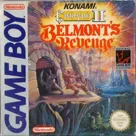
Released 1991 on Game Boy
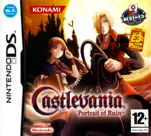
Released 2006 on Nintendo DS
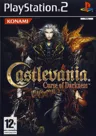
Released 2005 on PlayStation 2, Xbox
Released 1987 on NES, 1987 on SEGA Master System, 2016 on Windows...
Released 1989 on Game Boy, 2011 on Nintendo 3DS
Released 2020 on Nintendo Switch
Released 1999 on Nintendo 64
Released 1996 on SNES
Related Sites +
-
Castlevania Dungeon
Fansite dedicated to everything and anything Castlevania. -
Howard & Nester do Castlevania 2
A regular feature in Nintendo Power magazine, Howard & Nester was a comic strip about two game whizzes who would one-up each other, while disclosing hints and tips, in the settings of various recently-released games for the NES platform. In the November / December 1988 two-page installment, they figure out how to find Bodley Mansion. -
OC ReMix Game Profile
Fan remixes of music from Castlevania II: Simon's Quest, including the album "Sonata of the Damned". -
Play "Castlevania II: Simon's Quest" online!
The entire game can be played on this website, which uses a Java-based NES emulator called vNES to call up ROMs for its visitors. -
Video review of Castlevania II
The Angry Video Game Nerd, Jame Rolfe, reviews Castlevania II: Simon's Quest. This is Jame Rolfe's first Angry Video Game Nerd review. -
Video review of the Castlevania series (WARNING: Language)
The Angry Video Game Nerd, James Rolfe, reviews games in the Castlevania series. In part 2, he takes a second look at Castlevania II: Simon's Quest and reviews Castlevania III: Dracula's Curse, both on NES.
Identifiers +
Contribute
Are you familiar with this game? Help document and preserve this entry in video game history! If your contribution is approved, you will earn points and be credited as a contributor.
Contributors to this Entry
Game added by Roedie.
Wii U, Nintendo 3DS added by GTramp. Wii added by Sciere.
Additional contributors: Guy Chapman, Foxhack, Pseudo_Intellectual, Echidna Boy, LepricahnsGold, jsbrigo, Cantillon, Patrick Bregger, Thomas Thompson, MobyReed.
Game added August 24, 2003. Last modified March 3, 2024.