Final Fantasy II
-
 Final Fantasy II
(1988 on
NES, 2009 on
Wii, 2013 on
Wii U)
Final Fantasy II
(1988 on
NES, 2009 on
Wii, 2013 on
Wii U)
-
 Final Fantasy II
(2001 on
WonderSwan Color,
PlayStation, 2009 on
PSP...)
Final Fantasy II
(2001 on
WonderSwan Color,
PlayStation, 2009 on
PSP...)
-
 Final Fantasy II
(2007 on
PSP, 2010 on
iPhone, 2012 on
Android)
Final Fantasy II
(2007 on
PSP, 2010 on
iPhone, 2012 on
Android)
-
 Final Fantasy II
(2021 on
Windows,
iPhone,
Android...)
Final Fantasy II
(2021 on
Windows,
iPhone,
Android...)
Description official descriptions
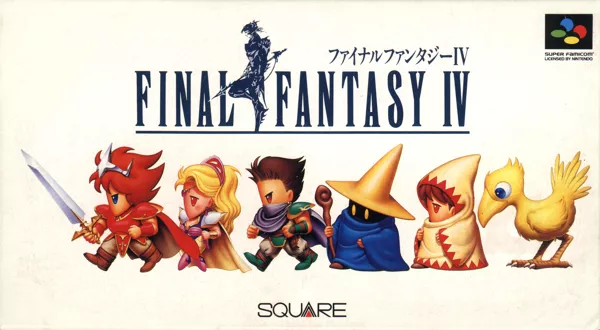
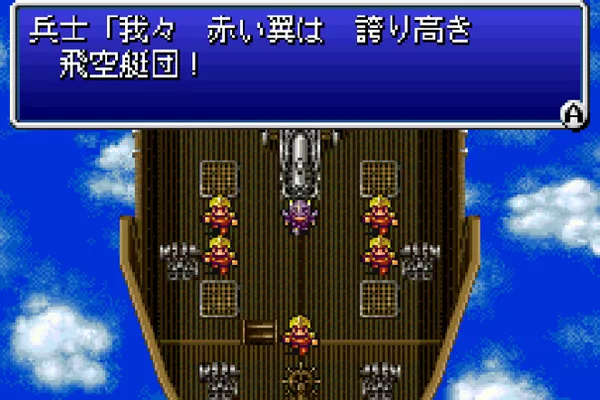
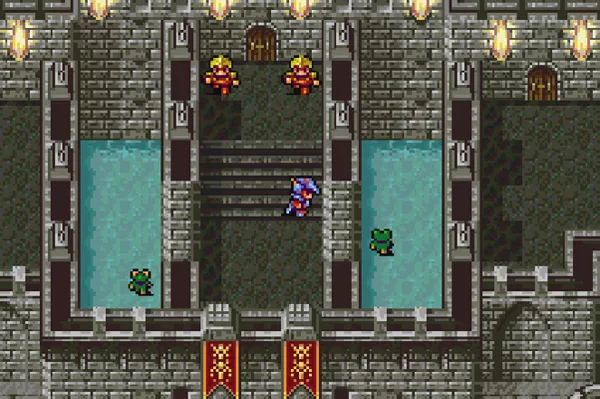
The military country of Baron is one of the strongest in the land, with a proud army and a majestic air force known as the Red Wings. However, the recent actions of the king make even the most loyal of his subordinates doubt his judgment. The captain of the Red Wings, Cecil, is ordered to attack the city of Mysidia and take the Water Crystal from innocent magicians who protect it. When Cecil questions the king's orders, he is immediately thrown out of the country and sent off to deliver a package to the village of Mist, accompanied by his best friend Kain, the captain of the dragoons. Little does he realize that the king's inexplicable behavior is but a part of a much larger picture, which he is yet to reveal.
The fourth entry in the Final Fantasy series was released as Final Fantasy II in the West, because the second and the third games were not released there at the time. The game is a Japanese-style RPG with top-down world map navigation, automatic leveling up, and random enemy encounters.
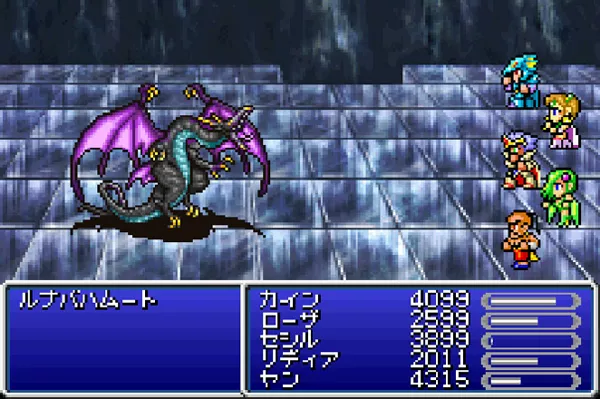
The game introduces a system called ATB (active-time battle). While combat is turn-based in its core, the game does not pause when the player accesses the battle menu. Enemies continue to act in real time regardless of the actions of the player-controlled party. The turns of the participants are calculated depending on their agility rating. Each player-controlled character has a special bar that gradually refills itself; said character may act when the bar is full.
Unlike all the previous Final Fantasy games, the fourth installment does not allow the player to customize the characters' abilities and classes. Each character belongs to a specific, clearly defined class: dragoon, white mage, black mage, summoner, ninja, etc. Each of these classes has distinct special abilities or magic spells. New abilities are learned automatically when a character reaches a pre-determined level. Characters join and leave the party as dictated by the game's plot events. The active party includes up to five combatants.
The PlayStation version adds a new rendered intro and ending.
Spellings
- ファイナルファンタジーIV - Japanese spelling
- 最终幻想4 - Chinese spelling (simplified)
Groups +
Screenshots
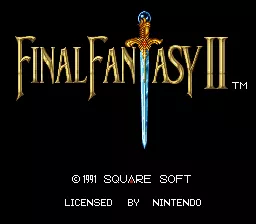
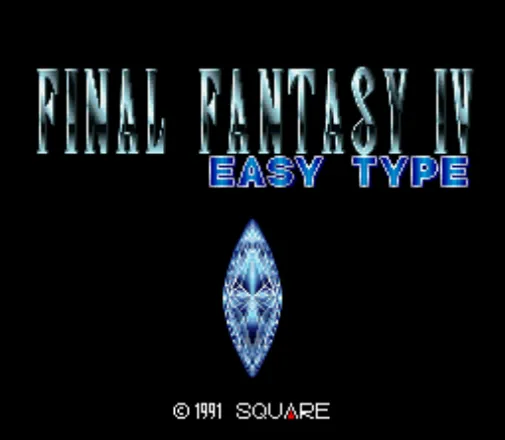
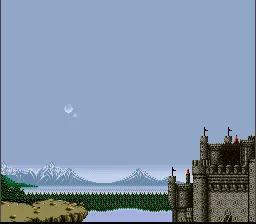
Promos
Credits (SNES version)
65 People (24 developers, 41 thanks) · View all
| Director |
|
| Character Design |
|
| Music Composer |
|
| Main Design |
|
| Main Program |
|
| Main Graphic |
|
| Map Design |
|
| Battle Design |
|
| Battle Program |
|
| Battle Graphic |
|
| Menu Program |
|
| Music Program |
|
| Sound Effect |
|
| Translation |
|
| Executive Producer |
|
| Special Thanks to |
|
| [ full credits ] | |
Reviews
Critics
Average score: 83% (based on 44 ratings)
Players
Average score: 3.7 out of 5 (based on 170 ratings with 2 reviews)
Introducing The Revolutionary ATB (Active Time Battle) System!
The Good
The 4th installment of the RPG genre-defining series Final Fantasy. Originally released in 1991 for the then hugely popular console, SNES. It was the second game in the series to be released outside Japan, at the time of its original release. After 14 years of its original release, it was ported on GBA in 2005. Although the game was very similar to its original release on the SNES, the GBA version had some minor changes or I must say improvements, mainly on the graphics part, like backgrounds were changed (improved) and the sprites (Character Forms) were also made better. Additional features like bestiary (An Encyclopedia on the in-game monsters), music of the game were also added, which can be accessed from the starting screen of the game. An additional dungeon (On The Moon) was also added. Overall the game was very nice and contained the originality of the original SNES version, this game is very much to be enjoyed.
The Bad
Frankly, there was nothing in the game to be hated, everything was in the right spot and in the right shape, but, yes the monster fights can be sometimes annoying.
The Bottom Line
A gem in the RPG genre games. A must play title for fans of RPGs, decent stories, final fantasy and others also. With a little number of flaws there are a lot of good things about the game, which single handedly outweighs the flaws. I'll give it a 4 out of 5!
Game Boy Advance · by ABGamer (70) · 2013
The adventure you experience in this game aged surprisingly well
The Good
Welcome to my Final Fantasy IV review (from now on FF4).
I think I don't need to introduce the Final Fantasy series as it's so well known, but just for the little history, after 3 installments on the NES console, Square decided to move to the new Super NES console and to release a game that, back in the day, was a groundbreaking RPG with great innovations.
While FF1 and FF3 had nameless heroes with no personalities, FF2 had actual characters and a storyline where they take place, but overall they were still characters with no personality at all. FF4 was the first game of the series where the characters really were developed, for real this time. Nowadays it is totally standard for a RPG to have developed characters and it would be considered a huge flaw if they weren't (hem hem FF12 hem hem), but back in the early 90s it wasn't so standard. While FF4 definitely didn't invent the idea of having characters with names and personalities in a video game, it greatly improved the concept and defined new standard as to how to tell a story in a video game.
The story is about a young guy, named Cecil, who is high ranked in the army of Baron (the largest city in FF4) and is forced by his superiors to hurt innocent people in Mystidia to steal an elemental crystal. He feels guilty and decide to rebel against the king's orders, but the tyrannic king doesn't like this at all and ban him from his functions. Cecil doesn't understands this because until recently the king used to be a good guy. Now you're out on an adventure to understand who manipulates the king, and try to preserve the other elemental crystals form being stolen.
The adventure goes on, and there is enough plot twists so that you are always still interested to play the game. In fact the story even gets sentimental at times, which is always a nice thing, and after all, is what the Final Fantasy series is about !
For the first time you get "active time battles" for the first time in the series so you'll be right at home if you're used to modern RPGs, no round based battles like in the NES games ! Also, this is the only standard RPG (not including T-RPGs obviously) I've ever played that allows you to have 5 people in the party ! I don't know why all the other games always have 3 or 4, because 5 is nice as well, it makes you less likely to have all them dead. This deserve a toast.
Finally I must say that the music is really nice, even if the quality of the instruments can be quite primitive for the SNES standard (I have later Square games in mind), it's nothing near as bad as Super Mario World or other Nintendo-made early SNES games, and does the work.
The Bad
There is two things I should complain about a little in FF4.
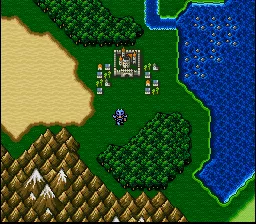
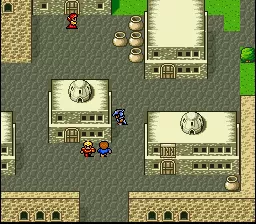
The graphics didn't age too well. They definitely only use a small portion of what is possible on the SNES, and looks like NES graphics which have been cheaply updated to more colors at the last minute. Anyways the enemies still looks impressive, and the battle effects are satisfying even if not all characters looks all that great, but I feel like the graphics on the playfield really could have been better and that Square put little effort in them. Anyways I doubt anyone will play FF4 for it's graphics right now so I'll pass on this one.
Now the other flaw which is more significant. It's a well known fact all Final Fantasy games all have a different battle system. Well FF4 is no exception, but it definitely have the simpler and less interesting system of the entire series (including it's 3 predecessor). It may sound harsh, but it's true. I suspect that Square focused so much on active time battles and 5-characters at a time that they completely forgot about making any character customisation nor any interesting evolution system. Characters have jobs but those are hardwired to the characters and can't ever be changed. They gain abilities/spells relative to their job when they level up. And yeah that's all folks, the only "customisation" you can do is switch equipment. Boring as hell isn't it ?
Since you also don't get a way to choose who comes in your 5 characters party, the story decides for you, and you can see that at a few spots they came with a really dumb excuse to replace a character by another. It's like as soon as a 6th character comes, someone that was in your former party will systematically fell on the ground and break his arm, being unable to fight for a while, just to make room for the new characters. OK it's not THAT pathetic, but almost. This remembers me the worst moments of FF2.
The Bottom Line
While FF4 has it's flaws, and definitely doesn't use the SNES hardware to it's fullest, it's still a great game to have to your SNES collection and I'd recommend Final Fantasy fans to play it, and to play the SNES version, if you can't get a cartridge then emulate but the very best is to get a SNES cartridge.
Although this game has been remade at least 5 times I think the remakes are not worth playing as they don't preserve the spirit of the original game. If you are about to play a remake, then avoid the DS remake at all costs as it is the one which destroy the game the most : It has blocky polygonal 3D graphics (which is worse than old pixeled 2D in my opinion), wrong notes all the times in the music, and is incredibly harder than the SNES game.
As a final word, I'd say that Square really did a nice game with this one, and it's a great start to the SNES trilogy. The game aged surprisingly well, and if you can see past it's outdated graphics, you'll see an amazing adventure that you're not going to forget.
SNES · by Bregalad (937) · 2012
Trivia
Localization
The original SNES release of Final Fantasy IV in the West was dubbed Final Fantasy II removed several abilities the player-controlled characters could use in battles, and was generally noticeable easier than the Japanese version. It also changed some of the character's names, e.g. Gilbert the Bard was renamed Edward, the summon monster Ramuh became Indra, etc. That release also omitted or censored some dialogue lines and scenes: * Dancers wear their dresses all the time as opposed to the bikinis they wore in the Japanese version * The blade that was dangling over Rosa's head in the Tower of Zott became a big iron ball * Much of the dialogue concerning the relationship between Cecil and Rosa and another character's jealousy was removed * Most of the swear words were removed, especially Palom's lines * Cecil and Kain had more developed background stories in the original version * Cecil and Rosa shared a passionate kiss after he rescues her in the Tower of Zott. The animation of them kissing was taken out * In Castle Jiott, there was an entire room removed: the Programmers's Room, where the player could talk to developers and even fight some of them. That room also contained a Porno Book that caused Cecil to have "dirty thoughts" when used.
The Western PlayStation re-release of the game included in Final Fantasy Chronicles restored all the features of the original version, with the exception of the character named Edward and a catch-phrase related to him, as described below.
You spoony bard!
The English translation of the SNES version contained a phrase that later became popular. At a certain point, the old mage Tellah gets angry at the bard Edward and tells him: "You spoony bard!". The awkward phrase became a cult favorite among fans. When a new English translation was made for the Playstation version, "you spoony bard" was kept intact, for the old time's sake.
But what does Tellah really call Edward (or Gilbert, in Japanese version)? In fact, the only word he says is 貴様 (kisama), literally "precious image", one of the many Japanese words for the pronoun "you". Despite the noble etymology, "kisama" is a very rough, insulting kind of "you"; using it is an equivalent to calling a person "bastard" or "son of a bitch" in English. We can only guess how this insulting "you" ended up translated as "spoony bard".
Awards
- EGM
- 1992 Buyer's Guide - Best RPG
- February 2006 (issue 200) - #29 out of 200 of the "Greatest Games of Their Time"
- Game Informer Magazine
- Augst 2001 (issue 100) - #40 in the Top 100 Games of All Time poll
- GameSpy
- 2005 – #5 GBA Game of the Year
- 2005 – GBA RPG of the Year
Information also contributed by Big John WV. PCGamer77, and Satoshi Kunsai
Analytics
Upgrade to MobyPro to view research rankings!
Related Games
Released 1999 on PlayStation, 2006 on Game Boy Advance, 2015 on Windows...
Released 1987 on NES, 1989 on MSX, 2010 on BREW...
Released 2007 on Nintendo DS, 2012 on iPhone, 2014 on Windows...
Released 2021 on Windows, 2023 on PlayStation 4, Nintendo Switch...
Released 2016 on PlayStation 4, Xbox One
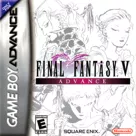
Released 2006 on Game Boy Advance, 2013 on iPhone, 2015 on Windows...
Released 2021 on Windows, iPhone, PlayStation 4...
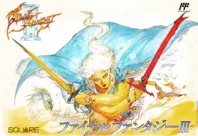
Released 1990 on NES, 2009 on Wii, 2014 on Nintendo 3DS
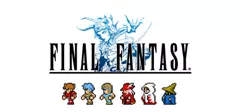
Released 2021 on Windows, iPhone, Android...
Related Sites +
-
FF-Fan
A fansite that offers all kinds of information on the entire Final Fantasy franchise, including walkthroughs, game media, discussion boards and fan art. -
Final Fantasy IV Wikia
Unofficial Final Fantasy IV Wikia -
OC ReMix Game Profile
Fan remixes of music from Final Fantasy IV, including the album "Echoes of Betrayal, Light of Redemption".
Identifiers +
Contribute
Are you familiar with this game? Help document and preserve this entry in video game history! If your contribution is approved, you will earn points and be credited as a contributor.
Contributors to this Entry
Game added by Satoshi Kunsai.
PlayStation 3, PSP, PS Vita added by Fred VT. Wii added by Charly2.0. Wii U added by Michael Cassidy. Game Boy Advance added by tootbrush. WonderSwan Color added by Unicorn Lynx.
Additional contributors: Unicorn Lynx, Alaka, Evil Ryu, Bregalad, —-, Cantillon, Patrick Bregger, Dawgbb, Thomas Thompson, ABGamer, firefang9212.
Game added July 23, 2001. Last modified November 5, 2023.