Final Fantasy III
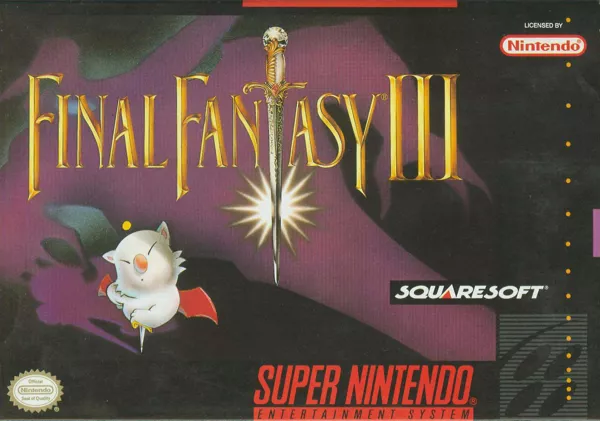
-
 Final Fantasy Anthology
(1999)
Final Fantasy Anthology
(1999)
-
 Final Fantasy III
(1990 on
NES, 2009 on
Wii, 2014 on
Wii U)
Final Fantasy III
(1990 on
NES, 2009 on
Wii, 2014 on
Wii U)
-
 Final Fantasy III
(2006 on
Nintendo DS, 2011 on
iPhone,
iPad...)
Final Fantasy III
(2006 on
Nintendo DS, 2011 on
iPhone,
iPad...)
-
 Final Fantasy III
(2021 on
Windows,
iPhone,
Android...)
Final Fantasy III
(2021 on
Windows,
iPhone,
Android...)
Description official descriptions
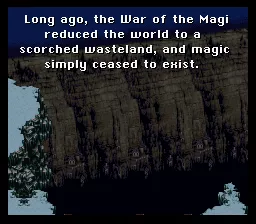
A thousand years ago, the War of the Magi occurred. People remember it as one of the most horrible tragedies in history. Since the War of the Magi, magic has been all but forgotten, technology began to grow, and people returned to seemingly normal lives. The only true worry people have is the Empire, whose leaders are looking to revive the great force once known as "magic".
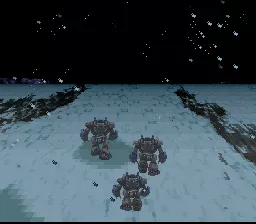
The Empire had heard word of the remains of a mystical being, known as "Esper", being found in the mining town of Narshe. Quickly, three soldiers were dispatched to find this Esper and bring it to the Emperor. One of the soldiers, a young girl, triggers a power in the Esper that initiates a dangerous series of events. The only ones who can help her are a rag-tag band of rebels and heroes, who offer their very hearts and souls to save the world from the mad plans of the Empire.
The sixth entry in the Final Fantasy series was dubbed Final Fantasy III in the West because three out of the five previous installments of the series had not been released there at the time. Similar to its predecessors, this is a role-playing game where the player controls a party of characters, traveling between various locales in the world, fighting randomly appearing regular enemies and bosses, and making the characters stronger by improving their skills and getting better equipment for them. The game maintains the ATB (active time battle) system of the two previous installments in the series, spicing traditional turn-based combat engine with a real-time element.
In battle, every character can fight using weaponry and items, and each has a special combat skill as well. It is also possible for nearly every character to learn magic spells. By finding various Espers and equipping them on characters, the player can improve their parameters in different ways and choose the magic spells the characters should learn.
Unlike most other Japanese RPGs, the game does not have a single main character. Rather, the player-controlled party can be considered the game's collective protagonist. The first part of the game develops linearly, with one of the characters playing a central role; however, during the second part, the player is associated with a different character initially, exploring the game world, recruiting characters, and completing sub-quests in a non-linear fashion.
PlayStation re-release of the game includes new FMV cutscenes, bestiary, and artwork galleries. Game Boy Advance version and later Android, iOS, and PC releases remove FMVs but instead include two new bonus dungeons (the Dragons' Den and the Soul Shrine), new bosses, espers, weapons, and gear, as well as many other minor additions and changes.
Spellings
- ファイナルファンタジーVI - Japanese spelling
- 最终幻想6 - Simplified Chinese spelling
Groups +
Screenshots
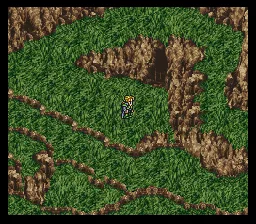
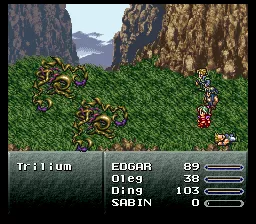
Promos
Videos
Add Trailer or Gameplay Video +1 point
See any errors or missing info for this game?
You can submit a correction, contribute trivia, add to a game group, add a related site or alternate title.
Credits (SNES version)
64 People (48 developers, 16 thanks) · View all
| Producer | |
| Director | |
| Main Programmer | |
| Graphic Director | |
| Music | |
| Image Designer | |
| Battle Planner | |
| Field Planner | |
| Event Planner | |
| Effect Programmer | |
| Battle Programmer | |
| Sound Programmer | |
| Effect Graphic Designer | |
| Field Graphic Designer | |
| [ full credits ] | |
Reviews
Critics
Average score: 89% (based on 72 ratings)
Players
Average score: 4.1 out of 5 (based on 413 ratings with 8 reviews)
Personally my favourite RPG of all time
The Good
- excellent soundtrack by the one and only Nobuo Uematsu. The music adds plenty of atmosphere and emotion to the game. Terra's theme is truly inspirational (heard in the intro and on the world map of the world of balance and some other places throughout the game).
- brilliant plot with many twist (one brilliant twist in particular, but can't give spoilers so you will just have to find out for yourself).
- characters all have unique abilities. All of them have personality helping the player to become more engaged into the story. There are characters you can care for like Terra and characters you hate such as the epic villain, Kefka.
- Many, many side-quests to uncover character backgrounds and extra items, etc to go with the 20 - 70 hours of fun you can get playing through the game depending on the amount of secrets, level building, etc you can be bothered with
- a generally all round classic RPG with great story, great characters, great music, and has to go down as one of the best games of all time.
The Bad
However the game isn't faultless:
- too many random encounters
- the story pretty much fades away after the world of balance (near the end of the game anyway though, which is pretty much all side-quests, so not that bad)
- leveling up system automatically levels up characters not in your party, and your characters gain more attributes when they have espers equipped making those levels gained without espers equipped semi-useless.
- maybe too many characters (i think about 14 or so including secret characters). Some of the characters you get too late on and don't develop much, e.g mog.
The Bottom Line
Snes version is better that playstation. The playstation one has extras such as fmv's but there are annoying loading times. A MUST play for all Japanese RPG and final fantasy fans. However some people find it hard to play 2-d RPGs in this day and age of 3-d brilliant graphics but they will only miss out on one of the best games in existence, some people even believe that all the newer final fantasy's have threw away all the good plots in exchange for graphics (except maybe FF7, of course). If you are like that then you should try Final Fantasy 7 - also a classic for playstation.
SNES · by Alan Yeung (3) · 2004
Great game but didn't fully satisfy my appetite
The Good
This review is about the sixth game of the Final Fantasy series, the well known epic jRPGs. This is the last game of what I'll call the "SNES trilogy" which is made of games Final Fantasy IV, V and VI.
The story is about Empire Gestra which oppress people, and how some of the spared nations continue to resist against it. You will control a group of rebel and fight to save people and resist the empire. While the story sounds very unoriginal, it is the developed characters and the way it is told which makes it much more interesting than it sounds at first.
This game features one of the largest character case of the Final Fantasy series with at least a dozen of character available. Unlike Final Fantasy V but like Final Fantasy IV, "jobs" (such as warrior, mage, monk, treasure hunter, etc...) are hardwired to protagonists of the game, which makes every character unique in his fighting style. However, you can also customise your character as wish because the system in this game allows to equip Espers (which is the name this game uses for summons). (This system is similar to the system that will be used later in Final Fantasy VIII). Depending on which summon you equip, you'll learn different spells (surprisingly, everyone can use black, white and time magic regardless of their jobs), and get different stat increases at level-up (in addition to the stat increases related to the job) which makes this system particularly powerful and interesting.
A good thing is that (like most of it's predecessors except FF4) this game has no such thing as a "Main protagonist", you could just have whoever you like in your party after some point in the story. However, it's sadly the last game of the series which lacks this "Main protagonist". Not that I don't like them, but it's nice you can have whoever you want in the party, and not be forced to have some guy just because he's the main protagonist.
Just like other Final Fantasy games, the controls are extremely intuitive and responsive, and are nothing to worry about. The menus are laid out in a way which makes perfect sense, and it's easy to equip your characters with items, etc, etc... (I just thought I'd mention that because this can't be said of all RPGs.) Save points are overall frequent enough and placed at appropriate locations.
This game have a weird Game Over system, where you will respawn at the last save point automatically, instead of loading the last saved state. From what I understand, EXP is kept but everything else is lost (I might be wrong). Apparently Square wanted to try something experimental, before going back again for the rest of the series. It doesn't make much of a difference, since you'll get most of your Game Overs at boss battles, and a save point is placed just before them in general, which means you didn't gain much EXP anyways.
Like the other games in the series, this game features many enemies and bosses you'll have to fight. While enemies are very often reused among different games of the Final Fantasy series, Final Fantasy VI is notable for not reusing anything from the previous games, and making it's own enemies from start. This is mostly a good thing, however, this game kind of break the tradition that was build up with the 5 first games. By the way, for the first time, elemental crystals are gone, too, which is sad because I just happen to love stories which are tightly coupled with the 4 elements. I don't know why but it's just a good old formula that never gets old. Well apparently Square decided it was getting old and, while elemental spells remain intact, the 4 elements are whipped out of the storyline (and will be wiped out for all following games of the series as far I can tell, except Final Fantasy IX where they play a minor role again).
Graphics are very well made for the time, we can immediately tell the developers played with the limitations of the SNES. Character sprites are slightly bigger than in the previous games, and are definitely more detailed. There is parallax scrolling and/or transparency effects everywhere. As you'd expect, summons are graphically very impressive. There is nothing to complain about this department, unless you are one of those guys who think that 2D graphics = bad graphics, in which case I have nothing to say to you.
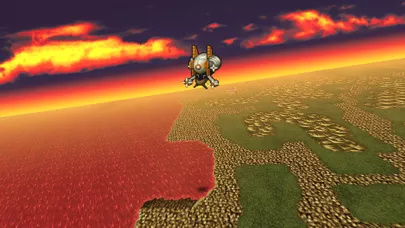
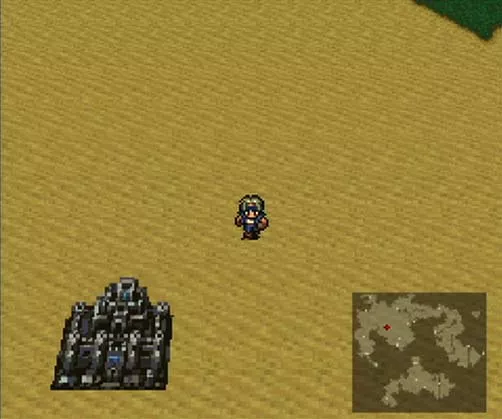
However I must say that the mode-7 world map (mode 7 is a way for the SNES to fake 3D graphics) is a bit annoying. When you are by foot, the 3D effect is already there but it doesn't work as well as it was supposed to. When you are by airship, it really looks amazing. When you are by chocobo, they made it look like the airship view, where the camera is behind the chocobo, and this is absolutely terrible. Because the chocobo, and therefore the camera, is close to the ground, it makes the ground blend way too much for you to see where you are, and because this is not actual 3D but fake 3D, everything including building and mountains are "drawn on the ground", which in this case looks terrible. Thank god they fixed this in Final Fantasy VII and allowed you to manually switch between the "upper" view and the "behind" view (in addition to having true 3D). So, overall, the world map is globally OK, but it's the weakest point for the graphics of this game, and the effect there is when you ride a chocobo hasn't aged well.
Musically, this game is great and up to line with it's predecessors. The battle theme and boss theme are notably great, and the world map music is amazing, even my parents happens love it, despite them loathing video games in general ! There is even a particular musical piece for a special world map location, which is a nice addition to the game. I'll have to add to say that, however, some songs are more forgettable than songs in Final Fantasy IV and V. Not a big deal though, as this game still have overall incredibly good music. The sound effects are fine and do their work. There is nothing particular to say about them.
The Bad
Yet, I can't refrain from saying this game is overrated. So many people keep shooting "FF6 IS THE BEST RPG EVEEEER", but let me just tell, I think they're wrong. Many of them are biased because they played this first, and before the Final Fantasy series was well known to the masses in the western world. I can perfectly understand why they prefer this game if this is the game that made them discover this amazing series.
However, I played Final Fantasy VI the very last, after beating all the others of the series from Final Fantasy I up to Final Fantasy X-2 (FF7 being the one who made me discover the series). I had of course started games of Final Fantasy VI multiple times, but never had the urge to continue until more recently. Of course, I had high expectations, and for the most part, they were met, however, I will of course have a totally different viewpoint that one of someone who discovered this game in their early teens.
I must say that of course, this is a good game, but the story is one of the weakest of the series, which is mainly well known for it's great stories. If we consider just the SNES trilogy, the quality of the storyline were in my opinion decreasing as the entries of the series were increasing. The story of FF4 is fabulous, especially for it's time. The story in FF5 was a bit of a let down, as the villain had no reason to be a villain, but it was still good with developed characters and multiple worlds to discover.
In FF6, all we have is the cliche of an empire against rebellion group, and the cliche of the evil emperor's right arm (Cefka/Kefka in this case) which is in fact even more evil than the emperor himself. Also, like in FF5 but unlike FF7 for instance, the main opponent of the game has ZERO reasons to be evil. He just wants to bring shame and destruction for his own personal fun, and that's it. This is not what I'd call a very developed character. Sure Cefka/Kefka has the particularity of being an "evil joker" type of villain, something original in the Final Fantasy series.
Although we have a large character set, most of the playable characters do not feel like they are actually in the party. There is about 6 fully developed and interesting characters and 6 jokes/dummy characters with no personality at all (some of them can't even be equipped) who joins your party by pure chance, and couple of characters between those two extremes. Many characters joins you extremely late in the game, some of them can't be obtained until right before the last dungeon.
A large character case works for games like Suikoden which were designed with this in mind (and with the assumption you're going to use your favourite guys), but in the case of FF6 it didn't work as well. Most of the "dummy" characters are still somewhat useful in combat which makes them not as dummy as I am saying (for instance Umaro who is some sort of gorilla, can't be equipped, can't talk and can't be controlled in battle but he hurts enemies EXTREMELY hard, which always happens to be useful), but yet all those dummy character play zero role in the story, and the half-dummy characters play a very minor role once and that's all, which is disturbing to say the least.
One particular character has a command called "Blitz" which is used to make combat-game style gamepad combos. However, this command is very bugged and almost unusable, and therefore I made him out of my party as much as possible. Unfortunately, he's one of the "developed" character, so at multiple times you have to bring him in the party. Not that I don't like him, but I'd like being able to use his ability without getting mad frustrated...
None of this makes FF6 a bad game, not even a mediocre one, but I just see it as being overall a tad inferior to both it's predecessors and it's sequels.
The Bottom Line
Here is it. FF6 is a must play for anyone interested in jRPGs and the Final Fantasy series in general. Missing this great game would be an error. However, my opinion is that it's still definitely weaker than other games in the series, especially it's direct predecessor and sequel, FF5 and FF7, which are both extremely solid (and my personal favourites). FF6 is not the pinnacle of the series of the perfect game some people describe.
There is also not much reason to replay FF6 again when you're finished, but that's the case for RPGs in general.
SNES · by Bregalad (937) · 2013
An ever-so-slightly flawed update
The Good
Continuing their trend of remaking past hits for the current generations of handheld consoles, Square Enix have now moved onto the sixth of the increasingly inaccurately named Final Fantasy series, seeing fit to release it on the Game Boy Advance. Indeed, this is one of the last big releases for Nintendo's somewhat neglected handheld.
Final Fantasy VI - But On The Game Boy Advance (or as Square Enix have dubbed it, Final Fantasy VI Advance) is a significant rerelease of the classic Super Nintendo RPG, originally released in 1994, but how significant this is depends on whereabouts in the world you buy your videogames from. Yes, it's the old chestnut of regions, one which Nintendo themselves pioneered back in the murky world of the mid-80's.
Let's take a tangent from reviewing the game itself to explore quite why, as a PAL gamer, this version of the game has me writhing about on the floor in giddy joy.
While North American gamers were somewhat neglected by SquareSoft until the mid-90's, here in Europe we didn't see so much as a whiff of a Final Fantasy game until Square and Sony decided it would be a good idea to have a crack at the PAL market, releasing Final Fantasy VII to acclaim and large sacks of money in 1997. This meant that while North American gamers at least saw three games in the series, here in the UK we didn't so much see even one of the spin-offs, such as Mystic Quest.
To make matters worse, one couldn't simply buy a cartridge from an NTSC region and expect the game to work. Thanks to Nintendo's ingenious combination of hardware region detections and physically different cartridges, getting an import copy to work became an interesting process of either modifying a PAL console or buying an NTSC one and convincing it to work with our power supply and televisions. (While most TVs these days understand PAL, SECAM, and NTSC, these were rarer beasts as little as 10 years ago.)
Final Fantasy VI finally saw a release in Europe on the PlayStation in 2002, and sold like reasonably warm cakes - not at all hindered by the fact that Square bundled a PS2 demo of Final Fantasy X with it. This was a frankly ghastly port - a few additional FMVs, a bestiary, and slightly prettier menus were grossly offset by load times long enough to make you slip gradually into a coma, where at least you wouldn't care that your save games hadn't been mysteriously corrupted.
But I'm going off-message here. This is not a rant about the PlayStation port, but a celebration of the GBA version. Pleasantly, I can do just that and only be slightly bitter.
The entire SNES original is here, presented with the original graphics and a reasonable approximation of the sound. Due to the nature of the GBA sound hardware, the music sounds different; but that's a necessary trade-off, and the music still sounds remarkably close to the original. I could sing the praises of the game's soundtrack for the rest of this review, but I'll leave it with the simple statement that it's still one of the best of any game, ever. Other sounds are fine, and Kefka's trademark laugh is reproduced exactly. Once the game has been completed once, a music player becomes available should you wish to replay any of the game tracks. Well, it's cheaper than hunting down the OST.
The design is preserved from the original, an epic tale of swords and sorcery mixed with steampunk technology and Victorian aesthetics. Remarkably, it all works. The mix of fantasy and near-present day themes has been repeated elsewhere, but FF6 sticks out as one of the pioneers and it's impressive to see how well it appears even today. The graphics are beautiful and still look good compared to other GBA titles.
The story is essentially unchanged, save for the translation - more on that later. Again, it feels remarkably mature, and the sheer wealth of characters available makes the game seem so much deeper than later titles in the series. There's arguably no one central character, and in addition, the game should be praised for its strong female characters and refusal to pander to simple stereotypes. The sheer number of characters to choose from, including those optional two, should ensure you can replay the game with significantly different parties, especially in the latter half of the game.
To bring this into enhanced remake territory, Square Enix have added the ability to explore the world after you've beaten the final boss, including a brand new dungeon in the form of the Dragon's Den. Harder than the original, this includes some treasures which didn't exist in the original and so are must-haves for the completists. In addition, new Espers (Summon monsters, with extras) have been implemented.
I could stop here. A portable port of my favourite Final Fantasy game. What's not to love?
The Bad
Sadly, there are a few flaws in the plan. This is not a perfect port, if it could even be called a port at all. Most glaring is the slowdown evident during the more intensive magic attacks; this wasn't present on the SNES version, and despite the arguably limited hardware of the GBA, there must be ways of making simple sprite manipulation smoother than this. While it doesn't affect the gameplay, it's simply jarring.
Secondly, the game remains entirely too easy compared to other RPGs. While perhaps challenging for a newcomer to the genre, to anyone well-versed in Japanese RPGs, the game won't pose any particular challenges. Even the removal of some of the more exploitable bugs (the infamous Vanish trick, for instance) does little to increase the difficulty. But then, it does remove some of the pressing need to power-level your way through the game.
The music, while excellent, isn't the original, and some tracks just feel (hnng...) wrong in subtle ways. This is getting into nit-picking territory, and really shouldn't bother me. It never prevents the game from being anything other than enjoyable.
The cardinal sin, however, will only really touch upon those who hold the original so close to their heart. The original English translation was by none other than the legendary Ted Woolsey himself - a man responsible for Final Fantasy IV's "spoony bard" quip, among others. While he has been much maligned for some of his translations, I always found the SNES English translation to be charming in its way, not least because of the characterisation of everybody's favourite insane clown Kefka. Many lines have been re-written, and some of Kefka's best comments have vanished. Alas.
The Bottom Line
Despite those points I simply can't bring it upon myself to feel bad about Final Fantasy VI - But On The Game Boy Advance (That's Final Fantasy VI Advance - Ed). It's still an exceptionally good game, now portable. It's the same FF6 I fell in love with when I played a ROM through a SNES emulator during my GCSEs - well, sort of - and for that I can't be harsh upon it. A worthy update to the classic, and well worth hunting down while you still can.
Game Boy Advance · by Vulpine (247) · 2009
Discussion
| Subject | By | Date |
|---|---|---|
| Named wrong? | te_lanus (523) | Oct 7, 2018 |
| M A G I C | Simoneer (29) | Oct 1, 2010 |
| Holy crap. (another game music post) | J. P. Gray (115) | Jun 22, 2008 |
Trivia
1001 Video Games
Final Fantasy VI appears in the book 1001 Video Games You Must Play Before You Die by General Editor Tony Mott.
Characters
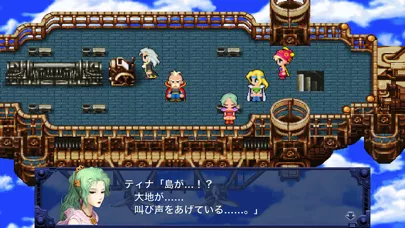
The names of some of the player-controlled characters were changed from their original Japanese counterparts: * Tina (ティナ) Branford became Terra Mash (マッシュ) Rene Figaro became Sabin Cayenne (カイエン) Garamonde became Cyan**
Development
Development of the game was rushed and several superbosses are included in the game's code but were not actually used. There are also several glitches in the game, possibly a result of the rushed development.
Extras
The European PlayStation release also contains the Final Fantasy X demo disc.
Manual
The game manual in the PlayStation version contains a major spoiler, by casually mentioning a major plot twist while listing the bonus content available after completion of the game.
Multiplayer
In the configuration menu of the original SNES release, characters can be set to either Controller 1 or Controller 2, making this in effect a two-player game. However, this control to the second player only works in battle and not on the overhead view maps or levels.
References
- In the SNES version (it is unknown if this applies to the PSX remake), the two soldiers that escort Terra at the beginning of the game are named Vicks and Wedge. This is a mistranslation, and a reference to Star Wars, where there are two pilots named Biggs and Wedge.
- Larry, Curly, and Moe are named after the slapstick comedy threesome The Three Stooges.
Sequel
Sometime in the mid-1990s, Square released several models showing off their new 3-D system. Much of what they used were characters and images from Final Fantasy VI, modeled into new 3-D. For this reason many people were expecting a sequel using these same characters or some kind of spin-off game. Much speculation was around Project Reality (the Nintendo 64) which promised to be a console system built around rendering 3-D graphics. In the end, nothing developed from these rumors about Final Fantasy VI and Square's following game in the series, Final Fantasy VII became the first to use 3-D modeling techniques.
Setzer
One of the main characters in this game is an avid gambler named "Setzer" (he even has a casino build on his airship). Supposedly, this was meant to be the German equivalent of "one who places a bet" or "placer". While it technically means this in German, it is never used that way; "Setzer" is rather used for "typesetter" (well, not that typesetters are common nowadays anyway). Yet another example of Japanese usage of German "names".
Soundtrack
The entire 25-minute opera sequence is available on CD as played by a full orchestra with singers. It's on the album Orchestral Game Concert #4, (translated, CD is Japanese) which is, itself, hard to find.
There have been multiple albums released with the game's soundtrack, all of them in 1994: a three-CD set with the original music, two CDs with orchestral and piano arrangements of certain tracks, and a CD with unused or remixed tracks. More details are to be found at Wikipedia.
Translation
It is a popular rumor that the lead translator for the English version, Ted Woolsey, apparently lacked professional translating experience. The discrepancies in translations have been attributed to this fact for several years. As with many translations, name changes and dialogue 'corrections' are left entirely up to the staff, but there are many who believe that these erroneous changes are due entirely to the fact that Ted did not have the knowledge to translate the text fully.
Version differences
There were two SNES releases of Final Fantasy III, the later release contains minor hardware revisions, as well as tweaks to the game itself such as the disappearance and renaming of certain items (Hero Ring, etc).
In the original SNES release of the game, Relm's "Sketch" ability is very buggy. Using it consistently against certain enemies can cause all sorts of interesting problems such as graphical distortions, random status effects and/or inability to use party members, a hacked inventory full of items/spells that are not even possible to get, large amounts of various items/spells and sometimes even a wipe of all the game's saved battery data.
Awards
- Electronic Gaming Monthly
- October 1994 (Issue 63) - Game of the Month
- 1995 Buyer's Guide - Best RPG
- 1995 Buyer's Guide - Best Music (Cartridge Format)
- 1995 Buyer's Guide - Best RPG (Japanese)
- November 1997 (Issue 100) - ranked #7 (Readers' Top 10 Games of All Time)
- November 1997 (Issue 100) - ranked #9 (Best 100 Games of All Time)
- FLUX
- Issue #4 - #28 in the "Top 100 Video Games of All-Time" list
- GameFan
- 1994 (Vol.3, Iss.1) - Overall RPG Game of the Year
- 1994 (Vol.3, Iss.1) - Best SNES RPG Game of the Year
- 1994 (Vol.3, Iss.1) - Best SNES Music
- Game Informer
- August 2001 (Issue #100) - #7 in the "Top 100 Games of All Time" poll
- Game Players
- January 1995 - Best SNES RPG Game in 1994
- GameSpy
- 2007 – #4 Handheld Game of the Year
- 2007 – GBA Game of the Year
- 2007 – GBA RPG of the Year
- VideoGames
- March 1995 - Best Role-Playing Game of the Year
Analytics
Upgrade to MobyPro to view research rankings!
Related Games
Released 1991 on SNES, PlayStation, Game Boy Advance...
Released 1987 on NES, 1989 on MSX, 2010 on BREW...
Released 2022 on Windows, 2023 on PlayStation 4, Nintendo Switch...
Released 1988 on NES, 2009 on Wii, 2014 on Nintendo 3DS
Released 1992 on SNES, PlayStation, 2011 on PSP...
Released 2003 on PlayStation 2
Released 2016 on PlayStation 4, Xbox One
Released 2001 on PlayStation 2
Released 2021 on Windows, iPhone, Android...
Related Sites +
-
FF-Fan
A fansite that offers all kinds of information on the entire Final Fantasy franchise, including walkthroughs, game media, discussion boards and fan art. -
Final Fantasy Compendium
Contains an insane amount of information on every Final Fantasy game and the series in general. -
Final Fantasy Extreme
Site that contains movies, wallpaper, codes, guides, walkthroughs, and general information on the Final Fantasy series. -
Final Fantasy Online Strategy Guides
Tips, tricks, walkthroughs, and just really useful information for Final Fantasy VI. -
GameFaqs Files
FAQs, Walkthroughs, multiples guides... -
Wikipedia: Final Fantasy VI
Information about Final Fantasy VI at Wikipedia
Identifiers +
Contribute
Are you familiar with this game? Help document and preserve this entry in video game history! If your contribution is approved, you will earn points and be credited as a contributor.
Contributors to this Entry
Game added by Satoshi Kunsai.
Android added by Fred VT. PS Vita, Windows added by GTramp. Wii U added by Michael Cassidy. iPhone, iPad added by firefang9212. Fire OS added by Sciere. Wii added by Joshua J. Slone. Game Boy Advance added by Unicorn Lynx. PlayStation 3, PSP added by MAT.
Additional contributors: Roedie, Unicorn Lynx, SAGA_, Alaka, Mobygamesisreanimated, Bregalad, Havoc Crow, DarkDante, Big John WV, DreinIX, —-, Patrick Bregger, FatherJack, 64er.
Game added October 22, 2001. Last modified March 4, 2024.