Ultima IV: Quest of the Avatar
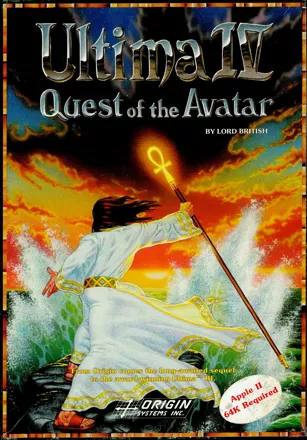
-
 Ultima Collection
(1997)
Ultima Collection
(1997) -
 Ultima Complete
(2002)
Ultima Complete
(2002) -
 Ultima I-VI Series
(1992)
Ultima I-VI Series
(1992) -
 Ultima: The Second Trilogy
(1992)
Ultima: The Second Trilogy
(1992)
Description official descriptions
Following the defeat of the evil triad in the previous three Ultima games, the world of Sosaria changed beyond recognition: continents rose and sank, and new cities were built, heralding the advent of a different civilization. Unified by the reign of the benevolent monarch Lord British, the new world was renamed Britannia. Lord British wished to base people's well-being on the ethical principles of Truth, Love, and Courage, proclaiming the Eight Virtues (Honesty, Compassion, Valor, Justice, Sacrifice, Honor, Spirituality, and Humility) as the ideal everyone should strive for. The person who could accomplish full understanding and realization of these virtues would serve as a spiritual leader and a moral example for the inhabitants of Britannia; he alone would be able to obtain holy artifacts, descend into the Stygian Abyss, and access the Codex of Ultimate Wisdom. This person is the Avatar.
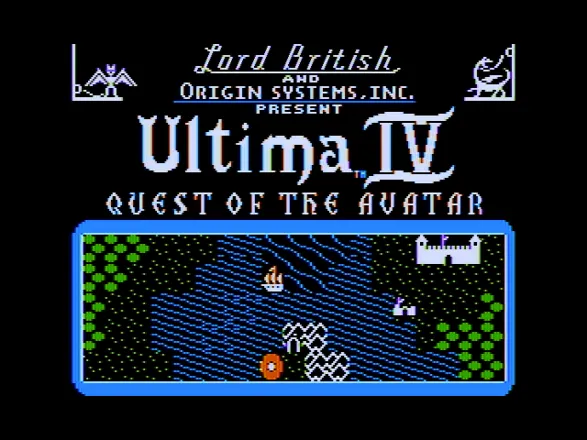
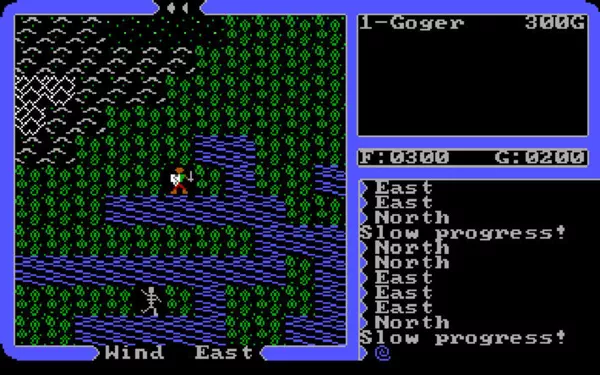
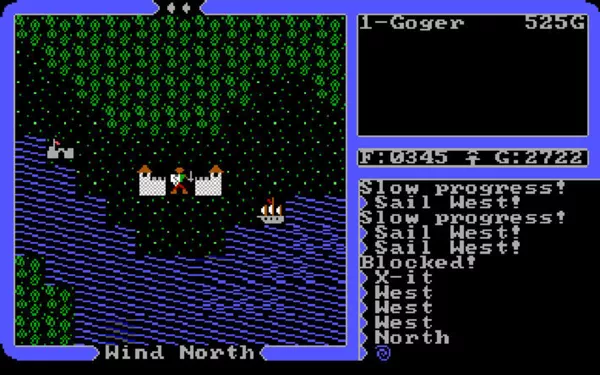
The fourth game in the Ultima series features an improved game engine, with color graphics and enhanced character interaction: the player can have conversations with non-playable characters by typing names of various topics. However, the main difference between Ultima IV and its predecessors in the series (as well as other role-playing games) lies in the game's objectives and the ways to fulfill them.
Instead of building up a character by any means possible in order to face a villain in the end of the game, in Ultima IV the player is trying to become the Avatar, a role model for people. This means upholding the Eight Virtues, basically trying to become a better person. Making morally conscious decisions and helping other people is not done expecting a material reward, but because it is the actual goal of the game and the main focus of its gameplay. The game frowns on behavior typical of most other RPGs, such as backstabbing fleeing enemies or picking up everything that isn't nailed down even if it does not belong to the protagonist. This different approach established the game's reputation as the first "true" Ultima, influencing the design philosophy of later installments and the overall spirit of the series.
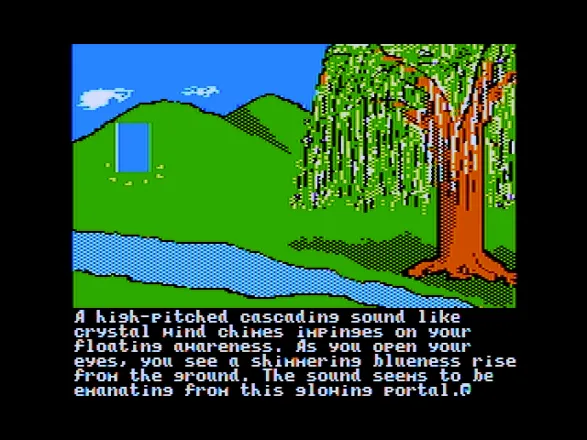
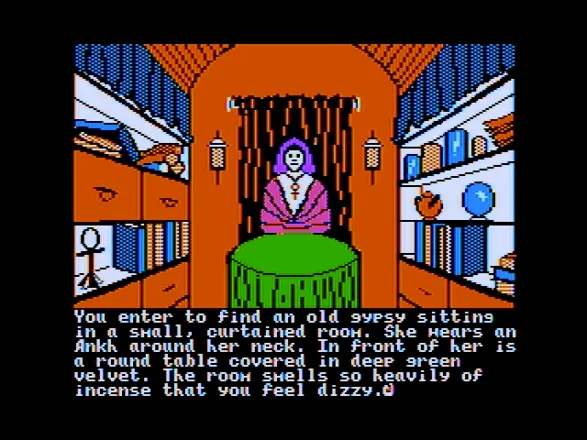
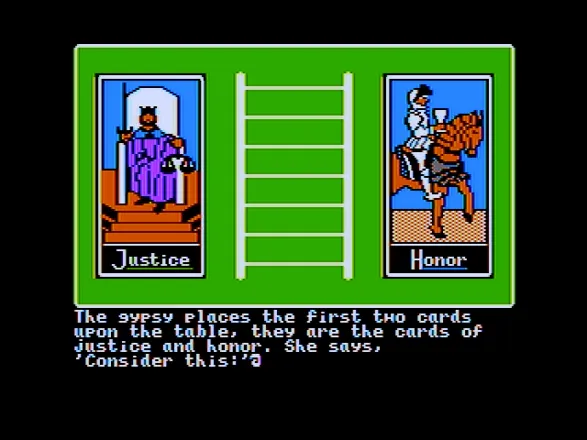
Character creation is done by choosing responses to morally ambiguous questions. Each of the Eight Virtues corresponds to a character class; by determining the player's personal priorities in the virtues, the game assigns a class and a starting location for the Avatar. After emerging in Britannia, the player is free to explore it in various ways (on foot, moongate teleportation, on horseback, by ship, etc.). Certain items must be collected in any order to enter the Stygian Abyss and complete the game. The Avatar also has to reach the highest level in all virtues. This is achieved by various means: donating blood increases Sacrifice, not fleeing from combat increases Valor, etc. The process, however, is not irreversible: should the Avatar overpay a blind seller, he gains Compassion points; should he, on the other hand, cheat the seller by underpaying, his level in several virtues would decrease.
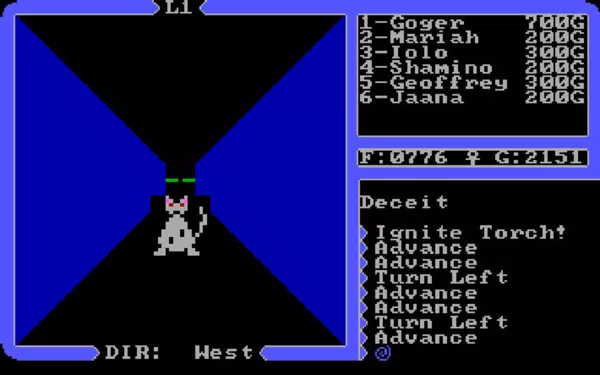
These unorthodox features of the game co-exist with plenty of traditional RPG elements, such as dungeons to explore and hostile monsters to kill. Enemies are encountered on the world map as well as in dungeons; combat takes place on separate top-down screens, allowing player-controlled and enemy parties freely move on them. Characters accumulate experience points and level up, gaining higher amount of hit points and access to stronger magic spells. Like in the previous installments of the series, world map, town exploration and combat are presented from a top-down view, while the dungeons are pseudo-3D and are explored from first-person perspective.
Ultima IV also introduces several new gameplay features to the series and role-playing games in general. A number of initially non-playable characters living in various areas of the game world are able to to join the party and fight alongside the hero, replacing traditional player-generated characters or mercenaries and adventurers available only in special locations. Additional new elements include buying and combining reagents in order to cast spells, puzzle rooms in dungeons, and others.
The FM Towns version, while identical to the others in gameplay, introduces upgraded graphics similar to those used in next installment of the series.
Spellings
- ウルティマIV - Japanese spelling
Groups +
Screenshots
Promos
Credits (Commodore 64 version)
15 People
| Project Leader |
|
| Plot Collaboration and <i>History of Britannia</i> Writer | |
| Illustrations | |
| Graphics | |
| Additional Programming | |
| Music | |
| Playtesting | |
| Commodore 64 Conversion |
|
Reviews
Critics
Average score: 80% (based on 30 ratings)
Players
Average score: 4.0 out of 5 (based on 343 ratings with 13 reviews)
The best console adaptation of an Ultima game.
The Good
Compared to Pony Canyon's adaptation of Ultima III Exodus, this game looks breath-taking. Seriously, though, the graphics are on par with the likes of the NES/Famicom Final Fantasy entries.
The essential elements of the game play are well preserved compared to the PC version of the game. You lose the ability to query NPCs to death, but you retain a similar combat system, spell casting with reagents, and the various morale trials that made Ultima 4 what it is. The same exploits/puzzles exist for leveling up. You won't find yourself wanting much in the way of mechanics.
The quest has been simplified somewhat, in that you simply collect the artifacts and take them to their respective shrines, rather than having to learn the mantras and all of that, but cutting through some of the busy work actually makes the game stronger.
The Bad
This port doesn't quite capture the epic feel of the home computer versions of Ultima 4. Like most console RPGs of the era, the game world is fairly flat. There just isn't enough space in the game for it to come alive as much as the original. Your companions lack their distinct personalities and are reduced to just classes.
The Bottom Line
Overall, if you enjoy classic 8-bit console RPGs and you missed this one the first time around, give it a go. It's different enough to be fresh, but not so different as to be alien, and not so clunky as its forebear.
NES · by Nancy "Infested" Kerrigan (36) · 2011
Ultima IV: Quest of the Avatar
The Good
Ultima IV is one of the most original games in history and this is the game that made Ultima so famous and led a large cult following. Why? because back then (and even today) RPGs are all about killing the main bad guy and find treasure. But with Ultima IV everything changed. There is no end boss an the point of the game is to master the eight virtues and become an Avatar the champion of virtues. There is no religion in Ultima IV but the 8 virtues can be described as a philosophy that the people follow, a way of life. Another thing worth mentioning is that the music is very good and the game offers a lot of exploration in the fantastic world of Brittania. This game can be tough and long if you don't use any guides but if you have a ton of other games to finish just use guides to find the mantra's and rune locations etc.
The Bad
The battle system and magic system is kinda poor. I found myself getting bored and was it was annoying at times. You can't even keep your spells and you have to worry about reagents. But Ultima's where always different from other rpg's.
The Bottom Line
This is a must for any RPG fan and see how much Ultima IV did to the game industry.
DOS · by TheNightWalker (12) · 2004
THE role-playing game. If you haven't played this, you aren't an RPG-er.
The Good
Everything. (Well, the graphics leave a little bit to be desired, but they weren't bad for the time.)
The storyline to this day remains unmatched. Character development is great -- it's not about just being the biggest and strongest. NPC interaction is very well done. AND, the music is fabulous (unless you have the IBM PC version).
The Bad
The lack of any respectable music on the PC version.
The Bottom Line
This game was revolutionary in its day, and has not been matched since. A stunning job overall!
DOS · by Mirrorshades2k (274) · 2000
Discussion
| Subject | By | Date |
|---|---|---|
| Apple II game supported the Mockingboard sound card. | Andrew Fisher (697) | May 23, 2023 |
| The Best Game Ever or The Biggest Waste Of Time? | mobiusclimber (235) | Nov 8, 2007 |
| Test, test! | Unicorn Lynx (181775) | May 17, 2007 |
Trivia
Cancelled remake
In 2001, Jaakko Peltonen organized an effort to completely remake Ultima IV: Quest of the Avatar with an updated game engine, isometric graphics and symphonic music tracks. The project was abandoned three years later.
Certificate
A completion certificate could originally be obtained after winning the game.
Completed remakes
Several remakes were successfully achieved, the two most famous being two Neverwinter Nights mods called Avatarship and Ultima IV Reborn
Development
In an interview with Computer Gaming World (Issue #26, March 1986) Richard Garriot states that the original version of the game was rushed for Christmas and therefore playtesting was cut short. In fact, Garriot himself was the only one to complete the game before release.
Extras
Original boxes of Ultima IV included a metal ankh symbol.
Fan patches
Aradindae Dragon & Wiltshire Dragon, members of the Ultima Dragons Internet Chapter, have created an upgrade for Ultima IV, adding upgraded 256 color graphics, MIDI sound, and other fixes. See the Links/Searches section for the URL.
There is no music in PC version, but there exist a freeware patch that adds all the music from C-64/Apple versions to play properly with the PC version as MIDI.
Freeware release
In order to promote the release of Ultima IX: Ascension, Origin made Ultima IV: Quest of the Avatar freeware.
References
Some of the town inhabitants in Ultima IV have the same names as famous historical figures. Or are they really those figures, magically transported to Britannia? For example, in one of the towns you meet a man named Shakespeare. In another one you see a person who looks like a philosopher, and when you ask him his name, he says: "I am Buddha".
Virtues
At the time of Ultima IV's development, RPGs were undergoing a bashing by right-wing extremists who claimed such fantasy gaming was amoral or downright evil. The concept of the virtues in Ultima IV were partially inspired by Richard Garriott's desire to prove otherwise.
The moral concept of the game was undoubtedly influenced by Buddhism. The number eight that appears in the game constantly (eight virtues, eight character classes, eight party members, etc.) is a sacred number in Buddhism (one of the most important concepts of which are the eight steps on the path to enlightenment). Shrines, meditation, mantras, the total independence of Britannia's moral codex from any supernatural power are all typical attributes of Buddhism. Lastly, the concept of the Avatar is nearly identical to the concept of bodhisattva, the Buddhist ideal person (although the word avatar itself derives from Hinduism and means reincarnation of God).
In an interview with Computer Games Online (www.cdmag.com), Richard Garriott offered some interesting insights about the creation of the virtues for Ultima IV. Here's the excerpt:
I started with a whiteboard and wrote down all of the virtues and vices I could think of, the seven deadly sins, many, many others. Obviously I wanted to talk about a few of these, but I couldn't address them all.
As I did more research, I began to notice things like greed and envy would have some overlap, so I needed to create a core set. You can easily split them up into virtues and vices, and eventually arrived at three primary aspects, which became the principle virtues of Truth, Love and Courage. Truth became Honesty, Love became Compassion, Courage became Valor, and I created the eight possible combinations of these three. Truth tempered by Love became Justice, Love and Courage became Personal Self-sacrifice, Courage and Truth became Chivalric Honor. Truth Love and Courage was kind of arbitrary, so I thought, "What is the all-encompassing virtue?" I said, "Spirituality," whether or not you're doing good or bad deeds in the world.
And what if you do none of the above? If not being virtuous is part of your psyche, I call it pride. Pride is not a virtue, so I decided to use the opposite, Humility. Since the eighth combination created a non-virtue, I began to create bits of pseudo-science I was pretty pleased with.
Ultimas are big in mathematical pseudo-science and alchemy, so I invented the Codex of Ultimate Wisdom to graphically illustrate their relationship. Then I associated the cities with the virtues, with the eighth one - which I called Magincia, the city of Pride - destroyed. Having these seven positive things with one eighth one that had to be flipped made for a nice variety of quests you could create.
Once the eight virtues were created, I needed to come up with quotes that expressed why each was important. And had to think of tests for people to see if they were supporting that virtue. Honesty was easy - I let you cheat shopkeepers and steal things, but the game kept a record where it could, later in the game, come back to haunt you. Just like the real world. Why is it you don't steal from people? Because if you do they'll throw you in jail or disown you. So that's how I designed the game - people will reject you if you're not honest.
So I went virtue by virtue and tried to craft these types of experiences.
Awards
- Computer Gaming World
- March 1988 (Issue #45) – Introduced into the Hall of Fame
- November 1996 (15th anniversary issue) - #2 in the “150 Best Games of All Time” list
- November 1996 (15th anniversary issue) – #2 Most Innovative Computer Game
- November 1996 (15th anniversary issue) – #11 Most Rewarding Ending of All Time
- March 2001 (Issue #200) - #10 Best Game of All Time
- GameSpy
- 2001 – #7 Top Game of All Time
- GameStar (Germany)
- Issue 03/2013 – One of the "Ten Best C64 Games“
- Happy Computer
- Issue 04/1987 - #16 Best Game in 1986 (Readers' Vote)
- PC Gamer
- April 2005 - #32 in the "50 Best Games of All Time" list
- Power Play
- Issue 01/1991 - Best Master System Game in 1990
Information also contributed by -Chris, Adam Baratz, Eisentel, JubalHarshaw, ktchong, PCGamer77, rstevenson, Unicorn Lynx and Ye Olde Inforcomme Shoppe
Analytics
Upgrade to MobyPro to view research rankings!
Related Games

Released 1994 on DOS, 1995 on PC-98
Released 1985 on DOS, 1986 on Amiga, Windows...
Released 1988 on DOS, 1990 on Amiga, Windows...
Released 1993 on Game Boy, 1994 on SNES
Released 1999 on Windows
Released 1992 on DOS, 1997 on PlayStation, Windows...
Released 1981 on Apple II, 1983 on Atari 8-bit

Released 1993 on DOS, 1995 on PC-98, Windows
Released 1987 on Commodore 64, DOS, Windows...
Related Sites +
-
Game Map (Sega Master System) on SMS Power!
Maps of locations and very detailed world map of the Master System version. -
Mo'Slo
Download the evaluation version of a popular DOS/Windows utility that can slow down modern super-fast computers to make older games like Ultima IV: The Quest of Avatar playable. -
The Exodus Project
Download an excellent patch to upgrade the original 16-color EGA graphics in Ultima IV: The Quest of Avatar to 256-color VGA and add MIDI music scores and prerendered still cutscenes in various points of the game. -
The Moongates Ultima IV Annex
The Moongates Ultima IV Annex - A comprehensive source for information on Ultima IV, and the home of the 256 color/MIDI upgrade patch! GET IT! -
xu4 - Ultima IV Recreated
xu4 is an engine reimplementation that allows to play DOS Ultima IV on Windows, Linux and MacOSX, with support for the graphics and sound patches and some optional enhancements.
Identifiers +
Contribute
Are you familiar with this game? Help document and preserve this entry in video game history! If your contribution is approved, you will earn points and be credited as a contributor.
Contributors to this Entry
Game added by Alan Chan.
Windows added by LAO0. iPhone, iPad, Macintosh added by Sciere. PC-98, FM Towns, PC-88, Sharp X1, Sharp X68000, FM-7, Atari 8-bit added by Terok Nor. MSX added by Unicorn Lynx. Atari ST added by Belboz. Commodore 64, SEGA Master System, NES, Amiga, Apple II added by Jeanne.
Additional contributors: JubalHarshaw, Unicorn Lynx, Indra was here, Corn Popper, ktchong, chirinea, WWWWolf, Игги Друге, Patrick Bregger, Jo ST, RetroArchives.fr, Kayburt.
Game added February 21, 2000. Last modified March 27, 2024.