Ultima IX: Ascension
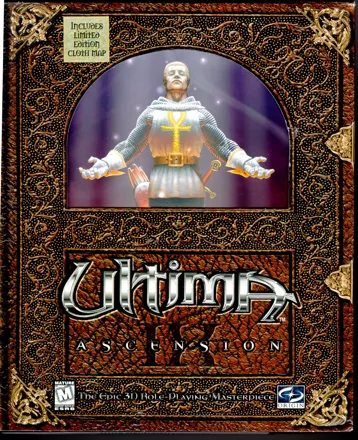
-
 Ultima Complete
(2002)
Ultima Complete
(2002) -
 Ultima Online: 7th Anniversary Edition
(2004)
Ultima Online: 7th Anniversary Edition
(2004) -
 Ultima: World Edition
(2000)
Ultima: World Edition
(2000)
-
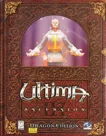 Ultima IX: Ascension (Dragon Edition)
(1999)
Ultima IX: Ascension (Dragon Edition)
(1999) -
 Ultima IX: Ascension (Dragon Edition) (Asia-Pacific)
(1999)
Ultima IX: Ascension (Dragon Edition) (Asia-Pacific)
(1999) -
 Ultima IX: Ascension (Premium Edition)
(2000)
Ultima IX: Ascension (Premium Edition)
(2000)
Description official descriptions
For the last time, the Avatar is being summoned to free Britannia from Guardian's curse. The eight Shrines of Virtues, the pride of Britannia, have been all desecrated by this evil and mysterious creature. The glyphs which protected them have been taken, and put into huge columns the Guardian built in Britannia, with their entrances hidden deep in dangerous dungeons. As a result, the people of Britannia have lost their virtues. The Avatar must now cleanse the shrines and let the virtues return to the people. His task becomes particularly difficult because he cannot trust the people he encounters any more. With the help of a few allies, the Avatar will have to help the inhabitants of Britannia, and learn about the true origin of the Guardian.
Ultima IX: Ascension is the last single-player installment of the Ultima series, and the conclusion of its overarching story. The game still contains role-playing elements such as the series' traditional character creation based on ethically ambiguous questions, a quest-based structure (including side quests), a large world to explore, heavy inventory management, financial system, as well as weapon and armor customization. However, the game has no experience points system; the protagonist's basic attributes are increased only after completing certain storyline events.
Similarly to the previous installment, the combat in the game is action-oriented, and the protagonist has no companions that would help him in battles. The Avatar can use melee and ranged weapons (bows) or magic spells to dispose of his foes. The puzzle-oriented structure of the dungeons further emphasizes the game's tendency towards action-adventure gameplay not dissimilar to Zelda games.
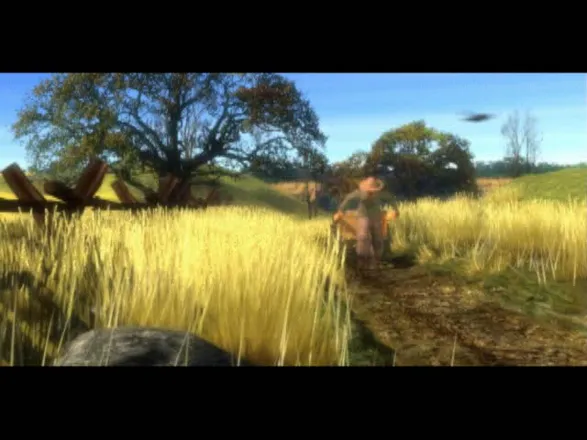
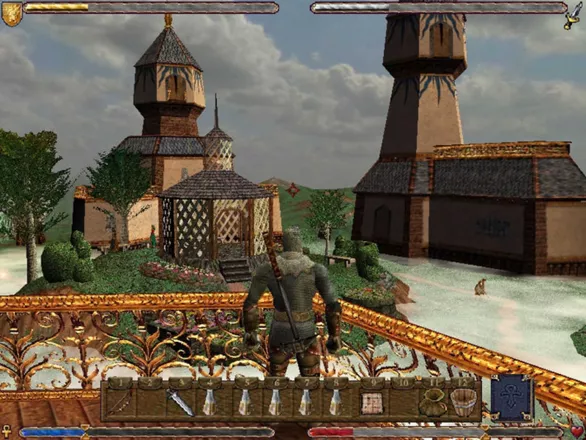
The game features support for EAX sound and a fully 3D world with an almost unrestricted freedom of movement: in addition to climbing and jumping, which the Avatar has "learned" in the previous game, he can also swim and dive; some well-hidden locations can only be accessed in this way. The physical interactivity with the game world has been preserved; almost every object can be moved from place to place or taken into the Avatar's inventory.
Spellings
- ウルティマIX: アセンション - Japanese spelling
- 創世紀 IX - Traditional Chinese spelling
Groups +
- Character Feature: Actual person's looks and voice
- EA Classics releases
- Fantasy creatures: Dragons
- Fantasy creatures: Goblins
- Fantasy creatures: Trolls
- Gameplay feature: Brothels
- Gameplay feature: Day / night cycle
- Gameplay feature: Drowning
- Gameplay feature: Karma meter
- Physical Bonus Content: World Map
- Ultima series
- Ultima universe
Screenshots
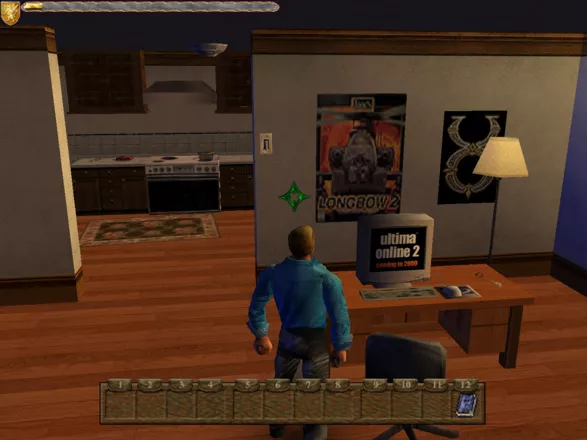
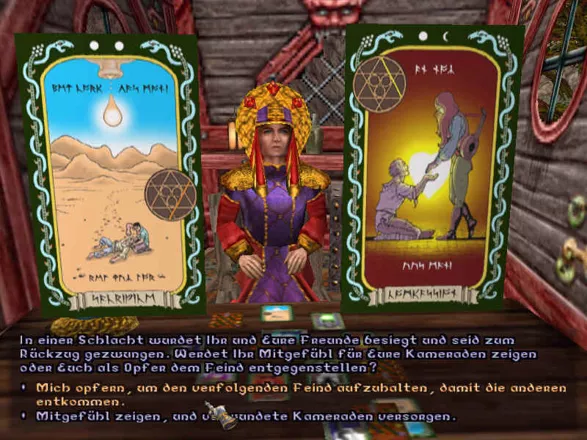
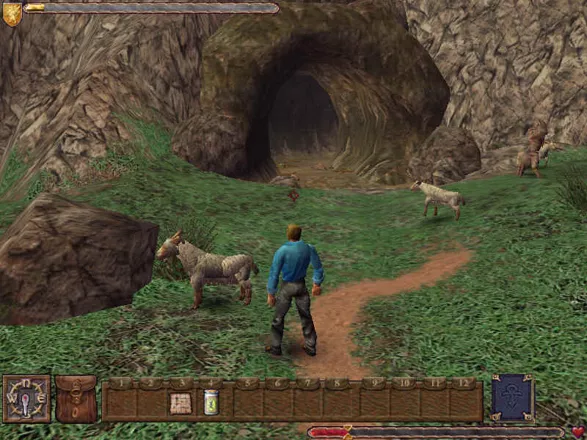
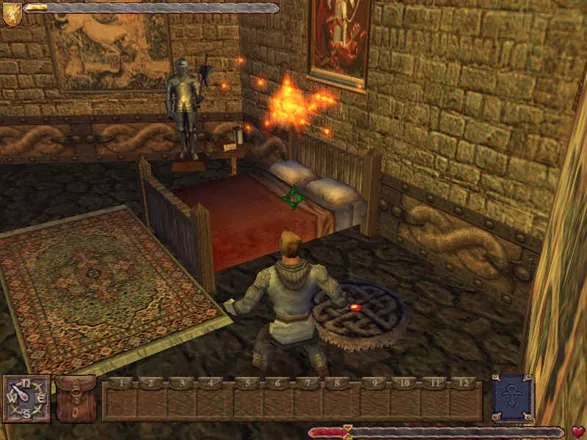
Promos
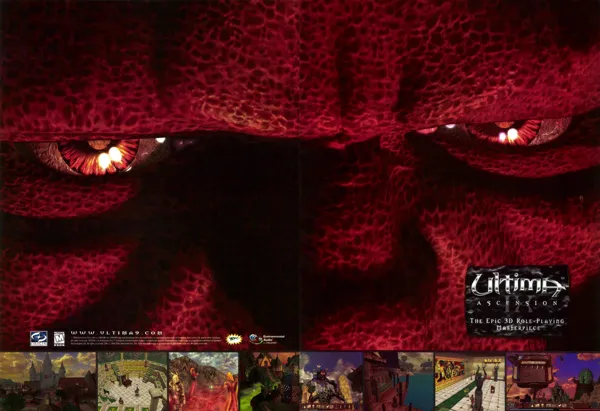
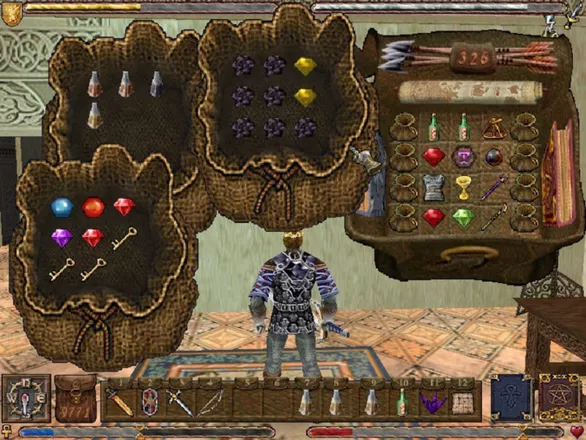
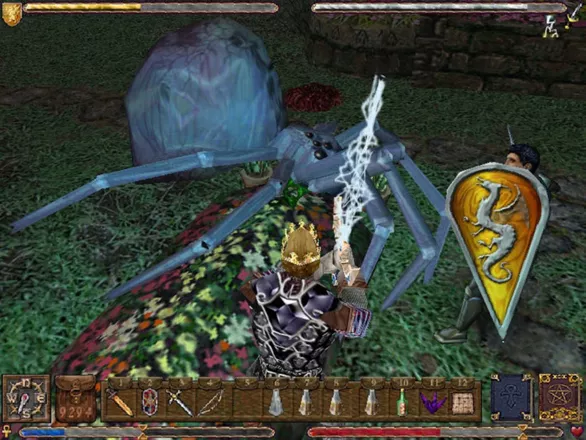
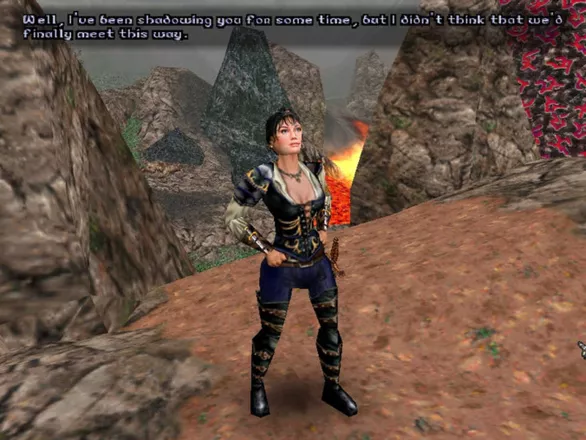
Videos
Add Trailer or Gameplay Video +1 point
See any errors or missing info for this game?
You can submit a correction, contribute trivia, add to a game group, add a related site or alternate title.
Credits (Windows version)
183 People (174 developers, 9 thanks) · View all
| Director | |
| Executive Producer | |
| Senior Producer | |
| Producer (uncredited) | |
| Lead Programmer | |
| Programmers | |
| Lead Artist | |
| Art Management | |
| Administrative Support | |
| Lead Designer | |
| Designers | |
| [ full credits ] | |
Reviews
Critics
Average score: 70% (based on 38 ratings)
Players
Average score: 3.7 out of 5 (based on 104 ratings with 12 reviews)
Ahead of it's time, for good and bad.
The Good
An ambitious, quantum leap in scope; free-form movement indoors and out to an extent not attempted before. Next-generation graphics including spacious outdoor scenes, highly interactive, beautifully rich textures. Rich story, as with all Ultima's.
The Bad
Buggy and unplayable on systems at the time due to impossible system requirements. This game was released under pressure, full of bugs including (from memory) frequent crashes. But that hardly mattered, as virtually nobody could play this game on release due to absurdly high system specs. I had a reasonably high-end PC and it was virtually impossible just to move around. A workmate had a very high-end PC and it was hardly any better.
The Bottom Line
Beautiful, free-form role-playing game light-years ahead of its time (in 1999), but it's own ambitiousness was its ultimate downfall.
Windows · by tino rossi (1) · 2006
The final proof that Ultima is dead
The Good
It was called Ultima. The intro sequence in "the Avatar's house" was pretty cool, including some nice special effects.
The Bad
Buggy as the Everglades. The descent to a platform jumping game, started in Ultima VIII, is complete - there is almost nothing left except place and character names from the "real" Ultima games. Real-time 3D blah blah, no character development, no story except "on to the next level, I mean dungeon". Ultima used to be about free-form exploration of a simulated world, with a plot that was mostly optional and served as a tourguide. This monstrosity has none of those elements.
The Bottom Line
A waste of bits you could use to store last year's shopping lists.
Windows · by weregamer (155) · 2003
Extremely bug-ridden game but its actually quite fun!
The Good
The game was fun to play as I played it all the way through with only the last and final patch from Origin. Its an experience worth going through only if you have been an Ultima fan from way back in the beginning. Truly an interesting experience.
The Bad
I did not like the way the game was handled and released by Origin. Its got a lot of bugs and playability might be impossible for some people. The storyline disappointed me a little bit as well but it was acceptable overall.
The Bottom Line
Its basically a Tomb-Raider like RPG set in the Ultima world. Its definitely worth experiencing if you've been a fan of the series. The sheer vast size of the world can seem quite amazing at times and the landscapes simply look marvelous.
This is the final game in the Ultima series. You once again become the Avatar and are warped to Britannia on your quest for the final battle between you and the Guardian. A long epic-like journey you will take through land, sea's and dungeons like no other Ultima and it culminates with a surprising ending.
Might be great for fans of the series but not much fun for everyone else. I personally liked it in a strange sort of twisted way as I've been contemplating finishing it again!
Windows · by cimerians (49) · 2002
Discussion
| Subject | By | Date |
|---|---|---|
| XP? | MasterMegid (723) | Sep 27, 2007 |
| the game | phoenix fire | Aug 27, 2007 |
Trivia
Cover
In an interview with Richard Garriott in the mid-1990's, he stated that the original idea for the Ultima IX cover art was to show the standard Ultima logo in crystalline letters against a cloud/sky background. Another prototype cover, published as a poster in 1996, was done in a stained-glass window style and showed the Avatar rising (ascending) with the Guardian's huge red hand attempting to pull him back down.
Development
The creation of Ultima IX has a very entertaining history.
After the completion of Ultima VIII in 1994, Origin started work on the ninth episode -- the finale of the third trilogy. It was supposed to be a bitmap game like Ultima VIII; 3D graphic was no issue back then. However, another project was soon deemed more important: Ultima Online. Ultima IX was put on ice, the complete staff was sent to create the online game. When it was finished in 1997, work on Ultima IX continued; as the graphics were hopelessly out of date by now, a 3D engine had to be programmed.
In 1997, there was only one major manufacturer of 3D chipsets: 3Dfx with its Voodoo technology. So Ultima IX was streamlined to exactly that hardware. After all, the game’s release date was supposed to by not too far away, by the end of 1998. Not surprisingly, the creation process took much longer. One particular reason for this delay was a series of ugly staff changes during 1998.
With Dan Rubenfield and Marshall Andrews, two of the designers for Ultima IX left Origin in May 1998. The departure was not a peaceful one. The two ex-employees blamed Origin to sacrifice gameplay for the sake of a fast buck. Richard Garriott, the father of the Ultima series, reacted equally harsh: both renegades hadn’t got a clue about game design and would have been thrown out anyway. Rubenfield and Andrews went to Ion Storm to work on Deus Ex.
Only one month later, lead designer Bob White followed the two to Ion Storm, although this time there was no bad blood.
The big bang came in July: project leader Ed del Castillo had to resign. Castillo was considered a whiz kid after his work on Westwood’s Command & Conquer series, and had been enticed away by Origin only a year before. He was responsible for some controversial design decisions for Ultima IX, like giving up on the party. After some serious arguments with Richard Garriott, Castillo took his leave due to “philosophical differences”. He went on to found his own software company, Liquid Entertainment, in 1999.
With most of his design team gone, Garriott, who had been acting as a supervisor up to that time, decided to take charge once again. He became executive designer for Ultima IX in Fall 1998.
Development for the game continued. By 1999, the situation on the market for 3D accelerator boards had changed considerably. 3Dfx had lost its supremacy, the Nvidia Riva TNT chip was the new darling of the gamers. Ultima IX was not prepared for this situation. The game ran perfectly well on a Voodoo board under Glide, but was hardly playable under Direct3D. The problem needed fixing urgently. However, there was no time for that. When winter 1999 came closer, Origin decided that it was time to publish Ultima IX to take advantage of the Christmas business.
The game that reached the public was a technical catastrophe. Despite the enormous hardware requirements, it wouldn’t run fluently on any but the most advanced computers. Many owners of TNT-cards didn’t even manage to get the game working. A serious bug in the storyline made it impossible to finish the adventure without cheating. As the complaints poured down on Origin, the company published a series of patches to address the most urgent of problems.
Although these updates gradually eliminated most bugs, Origins reputation had suffered strongly by then.
Glitches
There is a design flaw in the game where, if you know where to try, you can climb / jump up the side of the mountains in the park at the beginning of the game (it's all trial and error). Once you crest the mountains and descend the other side, you are now outside the game world looking back in. It's a big floating island where you can walk underneath it. The ground is transparent from your point of view like a one-way mirror. Weird / creepy!
Joshua
If you perform a side-quest and save Joshua in Moonglow, a book will appear on a table in his house. Read this book. It is called: "Everything an Avatar needs to know about sex".
Message board
One controversial move by Origin that was the final slap in the face for many gamers was its decision to shut down its message boards. Quite simply at the height of the tech-support madness surrounding Ascension's bugs, Origin decided to shut down Ultima Ascension's official Bulletin Boards, leaving them as read-only versions for a while while they re-directed traffic towards fan-managed sites such as The Wayward Avatar and Ultima Horizons.
Patches
Because Electronic Arts pushed Origin to get the game out for Christmas, the game was notorious for its technical problems and bugs. After numerous complaints, EA responded by mailing a remastered cd with the latest patch plus a bonus copy of Ultima Online to the registered owners of the Ultima IX. Unregistered owners had to download the very large patch from their website. This has to be one of the few known cases where it actually paid to register the game!
Soundtrack
After all that Ultima sequels, it was to expect as the music level was progressing, that there can easily be soundtrack expected. It was released in 1999. Soundtrack can be bought at http://www.synsoniq.com.
Tracklist: 1. Stones (chamber) - Britain (positive) - Introduction - Valoria Ships - Paws - Gargoyles - Minoc (negative) - Moongate - Terfin - Undead (intense) - Moonglow (negative) - Good vs. Evil - Moonglow (positive) - New Magencia - Rats & Spiders - Samhayne - Walking Theme - Humanoids - Pyros - Ambush - Good End Game - Stones (electro) - Ambrosia - Yew (positive)
References
- North-West of Britain there is a hidden mountain shrine to the late Phyllis Jones, mother of Scott Jones, the lead artist.
- When playing the game, if you go to the jailhouse of Castle Britannia, you will see a character in prison . This character is Richard Garriot screaming "Release me, I am the real Lord British!"
- A lot of the textures used for the paintings found in the game are really just recycled box covers from the previous Ultimas, including Richard Garriot's first game Akalabeth: World of Doom (often referenced as Ultima 0). The Tapestry of Ages however, is a completely original illustration done by the famed Hildebrandt brothers, fantasy artists known for their trading card and poster illustrations of several comic books heroes.
Awards
- Computer Gaming World
- March 2000 (Issue #188) – The Outpost Memorial Award
- GameStar (Germany)
- Issue 03/2000 - Best Game World in 1999
- Issue 03/2000 - Hardware Devourer Nr. 1 in 1999
- PC Player (Germany)
- Issue 01/2001 - Biggest Disappointment in 2000
- PC Powerplay (Germany)
- Issue 03/2005 - #9 Biggest Disappointment
Information also contributed by -Chris, cpc64, Dan Homerick, Henry Aloni, MAT, Unicorn Lynx, woods01, Ye Olde Infocomme Shoppe and Zovni
Analytics
Upgrade to MobyPro to view research rankings!
Related Games
Released 2000 on Windows
Released 2000 on Windows

Released 2003 on Windows, PlayStation 2
Released 1985 on DOS, 1986 on Amiga, Windows...
Released 1990 on DOS, 1992 on SNES, Windows...

Released 1992 on DOS
Released 1992 on DOS, 1997 on PlayStation, Windows...

Released 1993 on DOS, 1995 on PC-98, Windows
Released 1988 on DOS, 1990 on Amiga, Windows...
Related Sites +
-
Ascension Fan Site
Ultima 9 fan site affiliated with RPG Planet -
Hacki's Ultima Page
A site listing various inconsistencies within the Ultima series. The majority of the content focuses on Ultima IX: Ascension. (English/German) -
Hints for Ascension
Get the solutions you need with this question and answer type file. -
Review List
Reading all of the many reviews on this game is easier with this extensive list -
The wayward avatar
Newssite on Ultima, Origin and related subjects The wayward avatar had the best walkthrough on Ultima IX available
Identifiers +
Contribute
Are you familiar with this game? Help document and preserve this entry in video game history! If your contribution is approved, you will earn points and be credited as a contributor.
Contributors to this Entry
Game added by JubalHarshaw.
Additional contributors: Trixter, Terok Nor, Unicorn Lynx, frank rieter, Jeanne, Paulus18950, Patrick Bregger, Rik Hideto, Robin Adams.
Game added January 23, 2000. Last modified April 2, 2024.