Donkey Kong
-
 CHAMP Kong
(1996)
CHAMP Kong
(1996) -
 Crazy Kong
(1983)
Crazy Kong
(1983) -
 Crazy Kong
(1983)
Crazy Kong
(1983) -
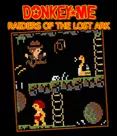 Donkey-Me: Raiders of the Lost Ark
(2013)
Donkey-Me: Raiders of the Lost Ark
(2013) -
 Donkey★Me
(2013)
Donkey★Me
(2013) -
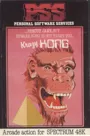 Krazy Kong
(1982)
Krazy Kong
(1982)
-
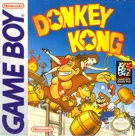 Donkey Kong
(1994 on
Game Boy, 2011 on
Nintendo 3DS)
Donkey Kong
(1994 on
Game Boy, 2011 on
Nintendo 3DS)
- Donkey Kong (1995 on TRS-80)
-
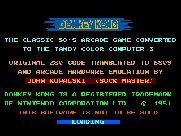 Donkey Kong
(2007 on
TRS-80 CoCo)
Donkey Kong
(2007 on
TRS-80 CoCo)
Description official descriptions
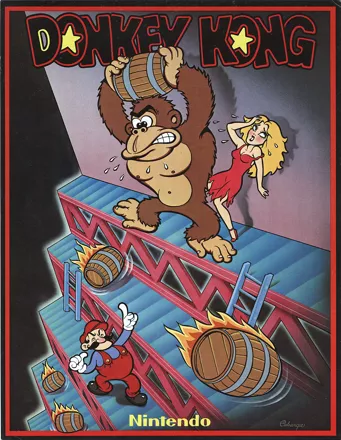
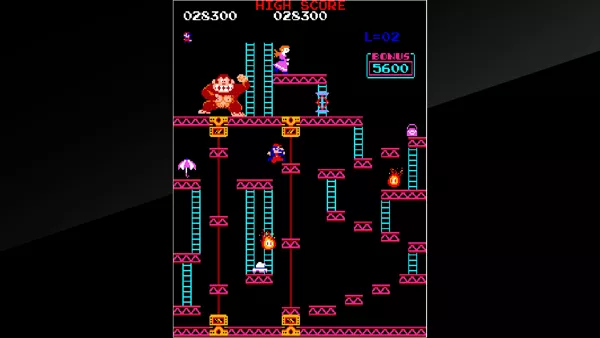
Released in the arcades in 1981, Donkey Kong was not only Nintendo's first real smash hit for the company but marked the introduction of two of their most popular mascots: Mario (originally "Jumpman") and Donkey Kong.
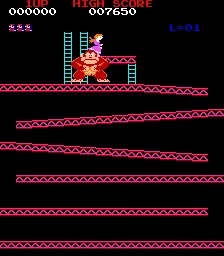
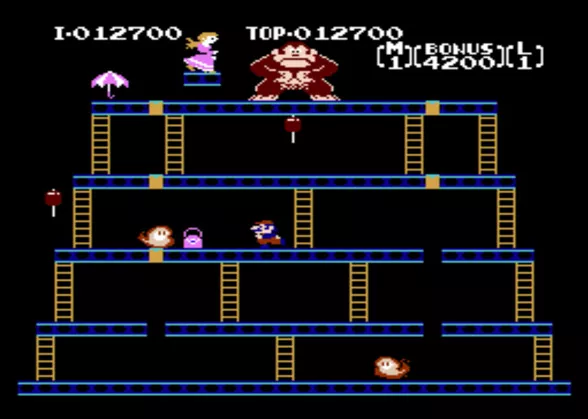
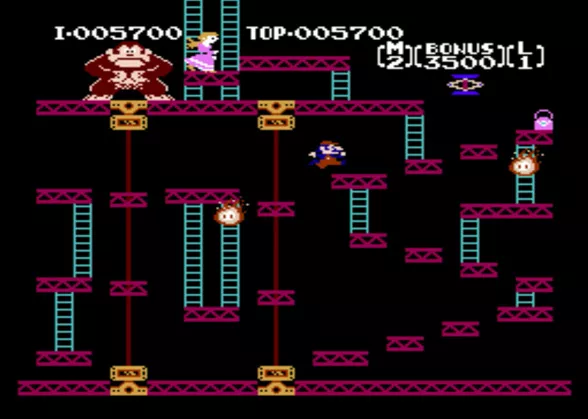
Donkey Kong is a platform-action game that has Mario scale four different industrial-themed levels (construction zone, cement factory, an elevator-themed level, and removing rivets from girders) in an attempt to save the damsel in distress, Pauline, from the big ape before the timer runs out. Once the rivets are removed from the final level, Donkey Kong falls, and the two lovers are reunited. From there, the levels start over at a higher difficulty.
Along the way, Mario must dodge a constant stream of barrels, "living" fireballs, and spring-weights. Although not as powerful as in other future games, Mario can find a hammer which allows him to destroy the barrels and fireballs for a limited amount of time. Additionally, Mario can also find Pauline's hat, purse, and umbrella for additional bonus points.
Donkey Kong is also notable for being one of the first complete narratives in video game form, told through simplistic cut scenes that advance the story. It should also be noted that in many conversions of the original coin-op game for early 1980's consoles and computer systems, Donkey Kong only used two or three of the original levels, with the cement factory most often omitted.
Spellings
- ドンキーコング - Japanese spelling
Groups +
- Animals: Primates (monkeys or apes)
- Arcade Archives series
- Classic NES / Famicom Mini / NES Classics releases
- Donkey Kong games
- e-Reader series
- Enhanced ports / Port differences
- Games made into TV series
- Games referenced in movies
- Mario games
- Nintendo's Arcade series
- Video games turned into board / card games
Screenshots
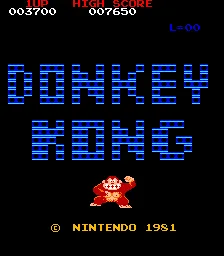
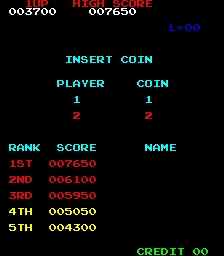
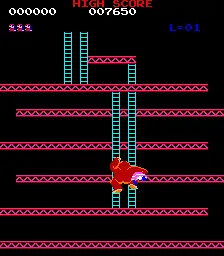
Promos
Videos
Add Trailer or Gameplay Video +1 point
See any errors or missing info for this game?
You can submit a correction, contribute trivia, add to a game group, add a related site or alternate title.
Credits (Arcade version)
13 People
| Executive Producer | |
| Producer | |
| Director and Game Designer | |
| Programmed by |
|
| Graphic Designer | |
| Sound Composer | |
| Sound Programmer | |
| Conversion Staff | |
| US flyer artwork |
Reviews
Critics
Average score: 68% (based on 56 ratings)
Players
Average score: 3.4 out of 5 (based on 359 ratings with 8 reviews)
A pale imitation, but there's still some fun to be had.
The Good
For all it's faults, this version of Donkey Kong has it where it really counts: the gameplay is solid, authentic, and fun. Jumping barrels, climbing ladders, pulling rivets, dodging fireballs, smashing things with a hammer - in the two levels presented, it's all there, but don't expect much more.
The Bad
Donkey Kong really deserved so much more. If this was an original platformer, or an obscure port, this would have a well-deserved place among the better 2600 games. But it has to measure up as Donkey Kong, and it just doesn't:
First, the barebones nature of the game: no music, no title screen, none of the cut-scene intermissions or intros.
Next, the graphics - is that really supposed to be Donkey Kong? Looks more like a sock puppet! And are those fireballs? I don't think so! More like strange ghosts.
And where's the sound? The iconic music? All you get is the squeaky shoes, a jump noise, and two goofy licks: one for when you die and one that plays when you beat a level and when your game is over.
More substantially, of the four levels, only two (!) have made it to this version: the barrel level and the rivets level. And the game starts out easy and stays easy. For a long time. If you have the stamina and patience, it does eventually become harder.
The Bottom Line
This version of Donkey Kong is ok, considering the limitations of the 2600 - but it could have been much better. It's a fun game if you can overlook it's shortcomings: flat difficulty curve, extreme repetitiveness, and lackluster graphics/sounds.
Atari 2600 · by Bob Montgomery (529) · 2007
One of the first platform games out there, still popular to this day
The Good
My first glimpse of Donkey Kong was playing it on a miniature arcade machine that you placed on the kitchen table. Its design mimicked that of the original coin-op, but the graphics and sound were inferior, with simple beeps and tiny sprites. It was the sort of mini arcade that you could take to the bathroom with you and have a game or two while you were doing your business, but I declined to do this as the smell would make its way inside the machine.
The game was released at a time when shoot-em-ups were popular in the arcades. But what makes Donkey Kong stand out from the others is that it is considered one of the first platform games. It was also a first for Shigeru Miyamoto, who went on create the legendary Super Mario series. Donkey Kong was quite popular that the game was ported to virtually every machine that existed at the time, with the NES being the first to get a version.
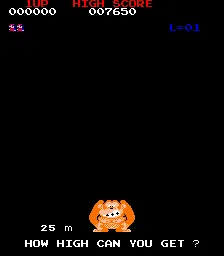
This version of the game is pretty much faithful to the arcade game. Most of the animations are there, and the sounand music is the same (except for that musical piece on the menu screen). While it's easy to criticize the NES version for lacking several features, such as the “How High Can You Get?” screen and the cement factory, you have to keep in mind that there is limited storage space on the cartridges the games are d stored on. (I believe that NES cartridges only hold 4MB, while the coin-op holds much more than that.)
Donkey Kong was one of the first games where it is easy to get a really high score that no one can achieve, if you know the strategy to beat the more difficult levels later on. Although you get points by rescuing your girlfriend from the big ape, there are a lot more bonus points to be gained by getting her belongings and smashing obstacles with a hammer. The more levels you advance, the higher these items are. So far, the furthest I got was level three.
The Bad
I can't think of anything bad about the game.
The Bottom Line
Donkey Kong is considered one of the first platform games, and the NES received one of the first ports. Aside from a few differences, it is very much faithful to the original coin-op in terms of graphics and sound. The game can be used to top your previous high score every time, or it's good to have a blast at it after you get home from work.
NES · by Katakis | カタキス (43087) · 2017
Good port, but the NES and Game Boy Advance versions are better.
The Good
When you think of Nintendo, what comes to mind? Probably Mario or Donkey Kong would to come to mind. They made their first appearance in the 1981 arcade game, Donkey Kong. After it's success in the arcades, it was ported to as many home consoles and home computers you could think of. All of the ports of the game I played are enjoyable. The Atari 2600 version is just like the other ones. I have a lot of fun playing this port. The graphics are pretty cool (I still think Atari 2600 graphics look cool.). The game is easy and simple. Its one those games that you can just pick up and play. The increased difficulty as the game goes on is also a nice challenge.
The Bad
As I said before, the graphics look pretty cool. Mario,and Pauline look pretty good. But Donkey Kong dosen't look all that well. He is just dark brown all over his body. Could they have bothered to add a blob of a light brown colored pixel on his chest? I'm Donkey Kong dosen't look so well because I'm pretty sure the 2600's color palette was limited. Another disappointment is that there are only TWO levels. The arcade version had four. You could pretty much beat the game every time you play it.
The Bottom Line
But, overall, this is a enjoyable port of the arcade version that's cheap and easy to find. But, if your looking for a better version, I would recommend the NES or Game Boy Advance version.
Atari 2600 · by Jake Lewis (2) · 2011
Discussion
| Subject | By | Date |
|---|---|---|
| Mario's profession | theclue (174) | Oct 22, 2017 |
| Product codes | Michael Cassidy (21289) | Dec 21, 2014 |
| TRS-80 Coco should be split | Игги Друге (46653) | Aug 10, 2014 |
| Crazy Kong is Donkey Kong's name in Japan? | Grandy02 (673) | Sep 14, 2010 |
Trivia
1001 Video Games
The Arcade version of Donkey Kong appears in the book 1001 Video Games You Must Play Before You Die by General Editor Tony Mott.
Development
The game was designed as a Popeye game, however license agreements fell through and as a result Nintendo was forced to create their own characters.
Imitators
- In 1981, O.R. Rissman, president of Tiger Electronics, obtained a license to use the name King Kong from Universal City Studios. Under this title, Tiger created a handheld game with a scenario and gameplay based directly on Donkey Kong.
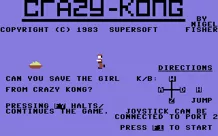
Crazy Kong is another example, a clone manufactured by Falcon and licensed for some non-American markets. Nevertheless, Crazy Kong machines found their way into some American arcades during the early 1980s, often installed in cabinets marked as Congorilla. Nintendo was quick to take legal action against those distributing the game in the U.S.- Bootleg copies of Donkey Kong also appeared in both North America and France under the Crazy Kong or Donkey King names.
- In 1983, Sega created its own Donkey Kong clone called
Congo Bongo . Despite being in isometric perspective, the gameplay is very similar. - Clones on the TRS-80 Color Computer include Donkey King and Monkey Kong
- In 1983 Tomy produced an electromechanical game called Kong Man that was based on Donkey Kong It was 15 inches tall and sold for £15.99 The object of the game was to negotiate a steel ball from the bottom of the structure to the top, avoiding a variety of obstacles. It was similar in game-play to Screwball Scramble and can occasionally still be found on eBay
Legacy
This is the game that changed the name of "Jumpman" to "Mario", a name which became one of the most famous in gaming history when the NES release hit the American market in 1986 featuring better graphics with more colors. It was popular enough to have a song inspired by it on the full-length "Pac-Man Fever" album - "Do The Donkey Kong". It also spawned a a Saturday morning TV cartoon based on it in the early 1980's and a breakfast cereal featuring sugary sweet corn cereal barrels.
Donkey Kong spawned two direct sequels: Donkey Kong Jr. and Donkey Kong 3. Mario Bros. is a spin-off featuring Mario. A sequel to the original arcade game on the Game Boy, simply titled Donkey Kong, pairs Donkey Kong and Donkey Kong Junior. It starts with the same damsel-in-distress premise and four basic locations as the arcade game then progresses to 97 additional puzzle-based levels.
Nintendo revived the Donkey Kong license in the 1990s for a series of platform games and spin-offs developed by Rare, beginning with Donkey Kong Country in 1994. Donkey Kong: Jungle Beat (2005) is the latest in this series. In 2004, Nintendo released Mario vs. Donkey Kong, a sequel to the Game Boy title. In it, Mario must chase Donkey Kong to get back the stolen Mini-Mario toys. In the follow-up Mario vs. Donkey Kong 2: March of the Minis, Donkey Kong once again falls in love with Pauline and kidnaps her, and Mario uses the Mini-Mario toys to help him rescue her.
In 2004, Nintendo released the first of the Donkey Konga games, a series that involves a rhythm-based bongo controller. In 2007, Donkey Kong Barrel Blast was released for the Wii. Super Smash Bros.: Brawl features music from the game arranged by Hirokazu "Hip" Tanaka and a stage called "75m", an almost exact replica of its Donkey Kong namesake. While the stage contains her items, Pauline is missing from her perch at the top of the stage.
This iconic game has also seen a few non-electronic home conversions: Milton Bradley adapted it into a board game in 1982 and a card game in 1983; in 2008, a DK-themed version of Jenga also was released.
Licensing
Taito offered a considerable sum to buy all rights to Donkey Kong, but Nintendo turned them down. Rivals Coleco and Atari approached Nintendo in Japan and the United States respectively. In the end, Yamauchi granted Coleco exclusive console and tabletop rights to Donkey Kong because he felt that "It [was] the hungriest company". In addition, Arakawa felt that as a more established company in the U.S., Coleco could better handle marketing. In return, Nintendo would receive an undisclosed lump sum plus $1.40 per game cartridge sold and $1 per tabletop unit. On December 24, 1981, Howard Lincoln drafted the contract. He included language that Coleco would be held liable for anything on the game cartridge, an unusual clause for a licensing agreement. Arakawa signed the document the next day, and on February 1, 1982, Yamauchi persuaded the Coleco representative in Japan to sign without running the document by the company's lawyers.
Coleco did not offer the game stand-alone; instead, they bundled it with their ColecoVision. The units went on sale in July 1982. Coleco's version is very close to the arcade, more so than ports of earlier games that had been done. Six months later, Coleco offered Atari 2600 and Intellivision versions, too. Coleco's sales doubled to $500 million and their earnings quadrupled to $40 million.
Meanwhile, Atari got the rights to the floppy disk version of Donkey Kong and prepared the Atari 800 version of the game. When Coleco unveiled the Adam Computer, playing a port of Donkey Kong at the 1983 Consumer Electronics Show in Chicago, Illinois, Atari protested. Yamauchi demanded that Arnold Greenberg, Coleco's president, shelve his Adam port. This version of the game was cartridge-based, and thus not a violation of Nintendo's license with Atari; still, Greenberg complied. Ray Kassar of Atari was fired the next month, and the home PC version of Donkey Kong fell through. This represents one of the few (if only) relationships Nintendo would have with Atari. At the time of this PC port, Nintendo was small in the arcade world and Atari was king. Years later in 1988, when Nintendo was king and Atari was small, Nintendo would sue Atari for coming out with a port of Tetris that was not officially approved by Nintendo.
Name origin
The name Donkey Kong is not Japanese, as it is widely believed. Instead, it is a combination of two words: The first word is supposed to stand for something that is hard to deal with: A mule, or donkey. The second word stems from King Kong. Hence, Donkey Kong.
Mario's profession
On the back cover of several early versions - including the Arcade, Apple II, Atari 8-bit, Commodore 64, and MSX - Mario is referred to as a carpenter, while the Game Boy Advance box version and subsequent Mario games state that he is a plumber.
References to the game
The influence on American popular culture can be shown with the numerous times Donkey Kong gets referenced in other media:
- In 1982, Buckner and Garcia and R. Cade and the Video Victims both recorded songs based on the game. Artists like DJ Jazzy Jeff & the Fresh Prince and Trace Adkins referenced the game in songs.
- The game was referenced in an episode of Fairly Odd Parents.
- In the movie, Billy Madison, Billy refers to Donkey Kong as the best video game ever, combating a 1st grader who said
Mortal Kombat was the best. - Donkey Kong is referenced in the Futurama episode Anthology of Interest II. The episode consists of three shorts; one of which involves Fry asking the "what-if" machine "what if life was more like a video game." In the short, Donkey Kong is one of the aliens that invades Earth. Mario also makes an appearance as the ambassador from Italy.
- In a 1997 episode of The Simpsons TV show titled "The Springfield Files", at the Noiseland Arcade, Donkey Kong sits in a chair on top a stand with a sign saying "Friday Meet Donkey Kong in Person." While holding a cigarette, DK picks a bug off his leg and eats it. Then, the Manager walks by and sees noone is there to see DK and says "Sorry Donkey Kong, you're just not a draw anymore." Kong replies angrily by throwing a barrel on top of the man knocking him down. "Hey! He's still got it!" observes the man from the ground.
- The 2007 motion picture documentary The King of Kong: A Fistful of Quarters explores the world of competitive classic arcade gaming and tells the story of Steve Wiebe's quest to beat Billy Mitchell's world high score in Donkey Kong.
- Even today, sound effects from the Atari 2600 version often serve as generic video game sounds in films and television shows
- In the 1983 episode Smaller Than Life from the TV series Magnum P.I., a kid is seen playing Donkey Kong on an Atari 800.
Re-releases
The arcade version of Donkey Kong released in 1981 originally featured four levels. Due to memory limitations on the NES version pak, the pak had led to the removal of the Pie Factory level (which would have been level 2). Today the only way to play the game with the four levels is to play the game in its old arcade form. However the game can also be played as one of the challenges in Donkey Kong 64. The NES version was re-released as an unlockable game in Animal Crossing for the GameCube and as an item for purchase on the Wii's Virtual Console.
Universal lawsuit
Nintendo's success with Donkey Kong was not without obstacles. In April 1982, Sid Sheinberg, a seasoned lawyer and president of MCA and Universal City Studios, learned of the game's success and suspected it might be a trademark infringement of Universal's own King Kong. On April 27, 1982, he met with Arnold Greenberg of Coleco and threatened to sue over Coleco's home version of Donkey Kong. Coleco agreed on May 3, 1982 to pay royalties to Universal of 3% of their Donkey Kong's net sale price, worth about $4.6 million.
Meanwhile, Sheinberg revoked Tiger's license to make its King Kong game, but O. R. Rissman refused to acknowledge Universal's claim to the trademark. When Universal threatened Nintendo, Howard Lincoln and Nintendo refused to cave. In preparation for the court battle ahead, Universal agreed to allow Tiger to continue producing its King Kong game as long as they distinguished it from Donkey Kong.
Universal officially sued Nintendo on June 29, 1982 and announced its license with Coleco. The company sent cease and desist letters to Nintendo's licensees, all of which agreed to pay royalties to Universal except Milton Bradley and Ralston Purina.
Universal City Studios, Inc. v. Nintendo, Co., Ltd. was heard in the United States District Court for the Southern District of New York by Judge Robert W. Sweet. Over seven days, Universal's counsel, the New York firm Townley & Updike, argued that the names King Kong and Donkey Kong were easily confused and that the plot of the game was an infringement on that of the films. Nintendo's counsel, John Kirby, countered that Universal had themselves argued in a previous case that King Kong's scenario and characters were in the public domain. Judge Sweet ruled in Nintendo's favor, awarding the company Universal's profits from Tiger's game ($56,689.41), damages, and attorney's fees.
Universal appealed, trying to prove consumer confusion by presenting the results of a telephone survey and examples from print media where people had allegedly assumed a connection between the two Kongs. On October 4, 1984, however, the court upheld the previous verdict.
Nintendo and its licensees filed counterclaims against Universal. On May 20, 1985, Judge Sweet awarded Nintendo $1.8 million for legal fees, lost revenues, and other expenses. However, he denied Nintendo's claim of damages from those licensees who had paid royalties to both Nintendo and Universal. Both parties appealed this judgment, but the verdict was upheld on July 15, 1986.
Nintendo thanked John Kirby with a $30,000 sailboat christened the Donkey Kong along with "exclusive worldwide rights to use the name for sailboats". More importantly, the court battle was a rite of passage for the company, teaching Nintendo that they could compete with the giants of the entertainment industry.
Technology
- The Intellivision version of Donkey Kong (programmed by Coleco) doesn't work on the Intellivision II system. Why? Mattel had the EXEC (the operating system of the Intellivision) purposely changed to look for a bit that third parties don't use when programming copyright info in their games. This also affected a couple of other Coleco releases for the Intellivision.
- Jumpman/Mario's design was decided upon largely because of the graphical constraints of gaming hardware at the time. He was given overalls to make the movement of his arms easier to see. A mustache made it easier to see his nose. The cap keeps one from noticing that his hair wouldn't move when he'd run and jump.
Awards
- Game Informer Magazine
- August 2001 (Issue 100) - #60 in the Top 100 Games of All Time (Poll)
- Killer List of Videogames
- Third Most Popular Arcade Game of All Time
- #25 on the "Top 100 Videogames" list
- Nintendo Power
- #148 Best Game Made on a Nintendo System
- Retro Gamer
- September 2004 (Issue #8) – #77 Best Game Of All Time (Readers' Vote)
- The Strong National Museum of Play
- 2017 – Introduced into the World Video Game Hall of Fame
- TeleMatch
- Issue 04/1984 – Computer Game of the Year 1983 (Readers' Vote)
- Issue 04/1984 – #2 Hand-held/Minigames of the Year 1983 (Readers' Vote)
Information also contributed by Ace of Sevens, Andrew Shepard, Chris Chidester, EboMike, gamewarrior, Guy Chapman, Jeanne, Joshua J. Slone, Nélio, PCGamer77, piltdown man, Pseudo_Intellectual, Robbb, Satoshi Kunsai, Scaryfun, WildKard and FatherJack .
Analytics
Upgrade to MobyPro to view research rankings!
Related Games
Released 1983 on NES, 1983 on Atari 2600, 2002 on Game Boy Advance...
Released 1984 on NES, Game Boy Advance, 2008 on Wii...
Released 2014 on Wii U, 2018 on Nintendo Switch
Released 2007 on Wii
Released 1994 on SNES, Game Boy Color, Game Boy Advance...
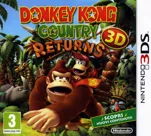
Released 2013 on Nintendo 3DS
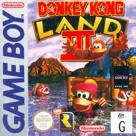
Released 1997 on Game Boy, 2000 on Game Boy Color, 2014 on Nintendo 3DS
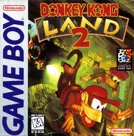
Released 1996 on Game Boy, 2014 on Nintendo 3DS
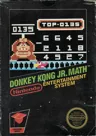
Released 1983 on NES, 2007 on Wii, 2014 on Wii U
Related Sites +
-
Classic NES Series for the Game Boy Advance
Covers the line-up of the new Game Boy Advance series of NES Classics. -
Donkey Kong Database
Fan site dedicated to the various games in the Donkey Kong series. -
Video review of Donkey Kong 1,2 & 3
YouTube reviewer Aqualung reviews Donkey Kong, Donkey Kong Jr. and Donkey Kong 3 on NES and mentions Donkey Kong Classics.
Identifiers +
Contribute
Are you familiar with this game? Help document and preserve this entry in video game history! If your contribution is approved, you will earn points and be credited as a contributor.
Contributors to this Entry
Game added by Trixter.
TI-99/4A added by Corn Popper. Atari 2600, Intellivision, ColecoVision added by PCGamer77. Wii U, Nintendo 3DS, Coleco Adam added by Michael Cassidy. Nintendo Switch added by Rik Hideto. Wii added by Guy Chapman. NES, Game Boy Advance added by Kartanym. Dedicated handheld added by OmegaPC777. Atari 7800 added by RKL. ZX Spectrum added by Kabushi. Atari 8-bit added by ZZip. Apple II, Amstrad CPC, VIC-20 added by Servo. Arcade added by Игги Друге. Commodore 64 added by wanax. MSX added by koffiepad.
Additional contributors: Kartanym, Guy Chapman, Sciere, monkeyislandgirl, LepricahnsGold, Luchsen, Patrick Bregger, FatherJack, theclue, SoMuchChaotix.
Game added December 15, 1999. Last modified April 8, 2024.