Ultima Underworld: The Stygian Abyss
-
 EA Compilation
(1994)
EA Compilation
(1994) -
 The Ultimate RPG Archives
(1998)
The Ultimate RPG Archives
(1998) -
 Ultima Underworld: The Stygian Abyss / Wing Commander II: Vengeance of the Kilrathi (CD-ROM Edition)
(1992)
Ultima Underworld: The Stygian Abyss / Wing Commander II: Vengeance of the Kilrathi (CD-ROM Edition)
(1992) -
 Ultima Underworld: The Stygian Abyss and Labyrinth of Worlds
(1993)
Ultima Underworld: The Stygian Abyss and Labyrinth of Worlds
(1993)
Description official descriptions
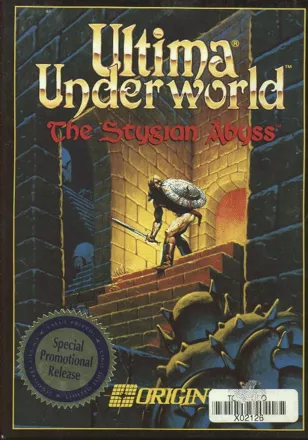
After having brought peace to Britannia during his previous journey there, the Avatar returns to our world. However, he is haunted by ghostly dreams that warn him of great danger in Britannia. The Avatar decides to travel there once again. Upon his arrival, he witnesses the kidnapping of Baron Almric's daughter. Found guilty of the crime, the Avatar is thrown into the Great Stygian Abyss with the choice of either finding the girl or rotting in the dungeon. On his journey, he will have to get along with the many inhabitants of the dungeon, who are survivors of a failed colony, and eventually find out that there's much more to this kidnapping than meets the eye.
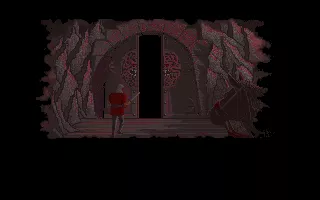
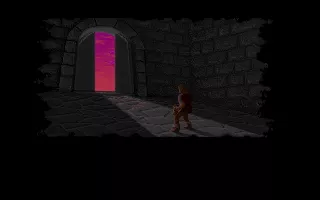
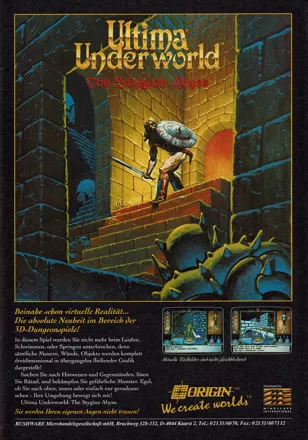
Ultima Underworld: The Stygian Abyss is commonly considered the first role-playing game with fluid first-person movement in a real 3D environment. Unlike earlier first-person RPGs such as Dungeon Master or Eye of the Beholder, the player can move in every direction and the graphics are updated continually. The player is also able to look up and down with the press of a key, jump, and swim. The dungeon is not made entirely of corridors and rooms arranged in a rectangular fashion but has a lot of variety: slopes, stairs, bridges, underground rivers, and more.
The game's combat system is action-oriented. The player has to draw his weapon, aim at his opponent, and hold the cursor over the game screen to inflict damage; the longer the player holds it, the stronger is the attack. Some weapons have different types of attacks, depending on where the cursor is held: for example, jabs are executed when the cursor is near the bottom of the screen, while slashes are performed with the cursor in the middle.
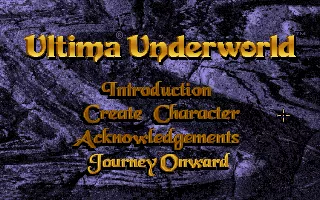
At the beginning of the game, the player chooses the gender, the class, and the initial skills for the Avatar. Skills include various weapon proficiencies, lockpicking, bartering, and others. They can be increased by reciting mantras at special shrines after having accumulated a sufficient amount of experience points. Leveling up also increases the Avatar's hit points and mana. The magic system is based on runes that can be found in the Abyss. If combined in the right order, they produce a magical effect.
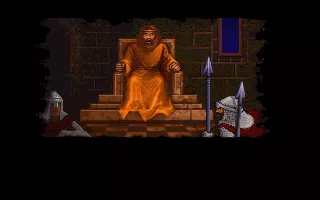
As the Abyss is populated by more than just monsters, there are various conversations the Avatar can conduct with non-playable characters. The player can also make choices regarding the Avatar's behavior towards these characters. Game progression is largely non-linear: the player is able to explore most of the Abyss in any order, though several specific tasks must be accomplished in order to complete the story. An auto-map displays all the locations the player has explored previously, and also allows the player to make notes on it.
Spellings
- ウルティマ アンダーワールド - Japanese spelling
Groups +
- Console Generation Exclusives: PlayStation
- Fantasy creatures: Dwarves
- Fantasy creatures: Goblins
- Fantasy creatures: Trolls
- Gameplay feature: Armor / weapon deterioration
- Gameplay feature: Auto-mapping
- Gameplay feature: Character development - Training
- Gameplay feature: Fishing
- Gameplay feature: Hunger / Thirst
- Gameplay feature: Paper doll inventory
- Genre: Dungeon crawler
- Protagonist: Female (option)
- Sound engine: AIL/Miles Sound System
- Ultima Underworld series
- Ultima universe
Screenshots
Promos

Credits (DOS version)
59 People (57 developers, 2 thanks) · View all
| Design | |
| Programming | |
| Music / Sound Programming | |
| Artists (manuals) | |
| Graphics / Artwork | |
| Music | |
| Sound | |
| Vocal Recording & Processing | |
| Manual Design | |
| Manual Editing and Production | |
| Cover Art | |
| Packaging | |
| Writers (manuals) | |
| Technical Consultants | |
| [ full credits ] | |
Reviews
Critics
Average score: 93% (based on 17 ratings)
Players
Average score: 4.0 out of 5 (based on 140 ratings with 5 reviews)
A Breakthrough 3-Dimensional Adventure game.
The Good
Ultima Underworld: The Stygian Abyss (UU), was a breakthrough game. Graphics were far advanced over what other companies were claiming as "3D" games. While Wolfenstein 3D, and Doom were really 2-1/2 D games (no ability to move in a up-down fashion), UU had jumping, flying, levitating, and much better (and eerier) graphics than what id had released at the time.
The implementation of Magic, fighting, and inventory were pleasingly simple. Everything is contained on the screen (no swtiching screens except for auto-mapping), and easy to access. Magic no longer requires the Avatar (you) to carry numrous regents and memorization of spells. Runes inscribed with letters (the same used in the Brittanic Alphabet) are used casting spells, and your character has a limited Mana pool. Your character must FIND all the runes needed for casting, so it makes the gameplay very balanced. You can't cast a high level spell on the first level of the game because you don't have the correct runes to cast the spell.
All fighting is done using mouse clicks. The position of your pointer determines the type of attack, and the length you hold down the mouse button determines the strength of the attack. So simple to use!
Communication, Sound and Music is well implemented, much like the S.C.U.M.M. interface for LucasArts Graphic adventures, and the IMuse system used in Most LucasArts games.
The Bad
Control is a bit touchy. You can use the keyboard, but the mouse is better.
The Bottom Line
If you like Ultima 9, or the lastest batch of Forgotten Realms games, find UU if you can (it took me 5 years) and play it. You'll enjoy every minute.
DOS · by Chris Martin (1155) · 2000
The Good
Before Ultima Underworld, I'd played a few 3-D games but never thought the quality was very high. That all changed when Ultima Underworld came out!
The game was very polished compared to other 3D games at the time. Your character could run, jump and completely interract with the environment. The atmosphere created by the graphics and music was absolutely intense. I was completely drawn into the game as I scampered around the dark labyrinth.
The Bad
Unfortunately, when you dropped an item you actually wound up throwing it. This was no problem if there was a wall in front of you. The item would simply bounce off the wall so that you could pick it up again. However, if there was water in front of you - then an important or critical item could be lost for good. This is exactly what happened to me as accidentally lost an item and was prevented from finishing the game. Very upsetting when you've invested a load of time into the game.
The Bottom Line
The first 3-D game that truly allowed me to escape. The only 3-D game that has done that since has been Half-Life.
DOS · by Toadstool (54) · 2000
The Good
There is so much to say about this RPG game. It was the first to use real 3D texture mapped representation, way before Doom and 1 month before Wolfenstein 3D. The game was HUGE, 8 underground levels with a perfect, balanced, different designs. The NPC had good AI, offered good lengthy adventure like dialogues, something never seen before in an RPG game.
Being totally underground, the game had a great immersion feeling of being trapped in the underworld. To get to the surface, the avatar had to go down to the deepest levels. There is definitely something special in an end to end totally dungeon RPG.
I played a lot of games, Underworld always stayed the undethroned N°One game in comparison.
If you didn't finish it, don't call yourself an RPG gamer.
The Bad
nothing
The Bottom Line
If you never finished it or worse played it then go and grab this game.
Underworld is the father of the elder scroll games, of Deus Ex, Arx Fatalis, Ultima 9 and the Gothic saga. You'll enjoy UW even if you've played the modern Gothic II.
DOS · by Ali Jakamy (7) · 2005
Discussion
| Subject | By | Date |
|---|---|---|
| Should I be an Avatar? | St. Martyne (3648) | Oct 1, 2008 |
Trivia
Armageddon
Towards the end of the game you can learn a spell that will destroy all life. If you cast it, all other creatures, items, doors and even stairways are destroyed, leaving only the walls, floors and ceilings.
Covermount release
A complete version of Ultima Underworld is available on the July 2000 issue of PC-Gamer Magazine (CD-ROM edition).
Development
- According to PC Gamer (July 2000), Warren Spector wasn't involved with Ultima Underworld until about a year into production.
- The programmers' test image for the texture-mapping code was a digitized B&W photo of Abraham Lincoln.
PlayStation version
This was the only Ultima game released for the PlayStation system, and only released in Japan. It can only be played on Japanese consoles because there are regional lockouts built in. Supposedly the monster graphics were improved over the PC version and the title music was redone.
References
Near the Magic Academy there is a spectre called Warren floating around. This is a obviously a reference to Warren Spector and continues a tradition of him appearing in the non-mainstream Ultima games (The Savage Empireand Martian Dreams).
Technology
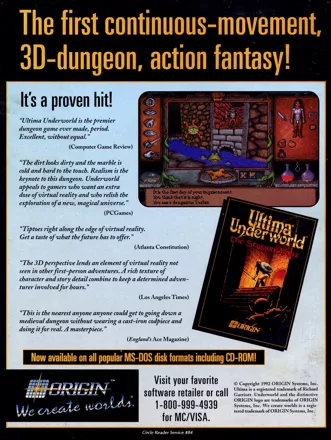
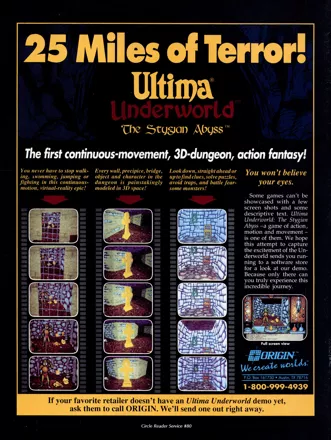
Ultima Underworld is the forefather of modern continuous-movement first-person texture-mapped gaming. It pioneered the use of "real" 3-D which allows the player to change the view up or down as well as jumping.
Reportedly it was a demonstration of the in-development Underworld technology during the 1990 CES that prompted John Carmack to write the Catacomb 3-D (released about six months before Ultima Underworld) engine which uses texture mapping. However, the extent of this influence is not clear due to conflicting statements from the id people.
Awards
- Computer Gaming World
- November 1992 (Issue #100) – Role-Playing Game of the Year
- April 1995 (Issue #129) – Introduced into the Hall of Fame
- November 1996 (15th anniversary issue) – #68 in the “150 Best Games of All Time” list
- GameSpy
- 2001 – #8 Top Game of All Time
- GameStar (Germany)
- Issue 02/1999 – #8 in the "100 Most Important PC Games of the Nineties" ranking
- Origin Awards
- 1992 – Best Science Fiction or Fantasy Computer Game
- PC Games (Germany)
- Issue 01/1993– Best RPG in 1992
- Power Play
- Issue 02/1993 – Best Game in 1992
- Issue 02/1993 – #2 Best RPG in 1992
- Retro Gamer
- September 2004 (Issue #8) – #62 Best Game Of All Time (Readers' Vote)
Information also contributed by Anthony Bull; Chris Martin, Fafnir, Jeanne, Kartanym, PCGamer77, Shadowcat and Ye Olde Infocomme Shoppe
Analytics
Upgrade to MobyPro to view research rankings!
Related Games
Released 1993 on DOS, 2011 on Windows, 2012 on Macintosh

Released 1993 on DOS, 1995 on PC-98, Windows

Released 2009 on Windows

Released 1985 on DOS, 1986 on Amiga, Windows...
Released 1999 on Windows

Released 1981 on Apple II, 1983 on Atari 8-bit

Released 1994 on SNES

Released 2018 on Windows, Linux, 2019 on Macintosh...
Related Sites +
-
Ganesh's Website
Walkthroughs, tips, hints, cheats, trainers, backgrounds, wallpapers, desktop themes, music, mp3s, midi, hand-picked *very* funny jokes and much MUCH more!
Identifiers +
Contribute
Are you familiar with this game? Help document and preserve this entry in video game history! If your contribution is approved, you will earn points and be credited as a contributor.
Contributors to this Entry
Game added by Terok Nor.
PlayStation added by Trixter. Windows Mobile added by Kabushi. PC-98 added by Unicorn Lynx. Windows added by eWarrior.
Additional contributors: rstevenson, G. Ganesh, eWarrior, Patrick Bregger, Rik Hideto.
Game added January 8, 2000. Last modified April 4, 2024.